


Types of Hearing Aids – From Invisible to Behind-the-Ear Models
The style determines how visible the hearing aid is. The technology determines how well you hear.
Hearing aids come in four main styles: RIC, with the receiver positioned in the ear canal; BTE, which sits behind the ear; ITE, which is custom-made to fit the outer ear; and CIC or IIC, which sits deep inside the ear canal and is almost invisible.
The right choice depends on the degree and type of hearing loss, the anatomy of your ear canal, and your everyday needs. The style itself does not determine how well the hearing aid performs — that depends on the level of technology.
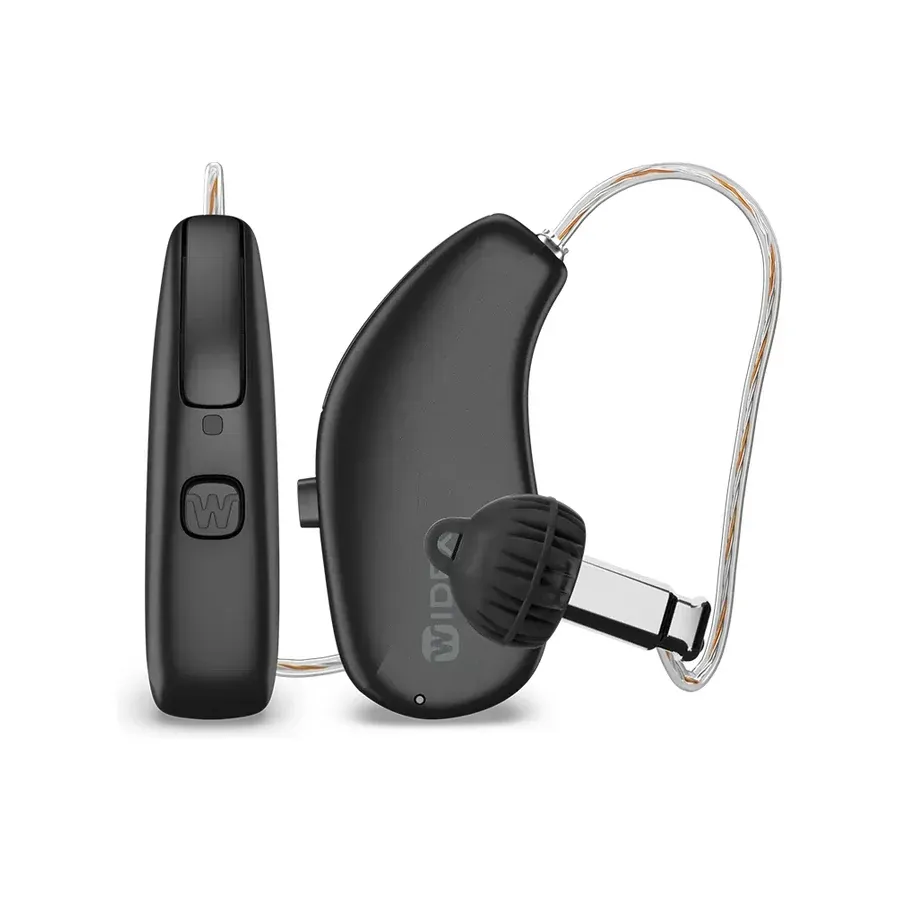
RIC
Receiver-in-Canal · den mest anvendte type
Selve apparatet sidder bag øret, mens højttaleren placeres inde i øregangen via en tynd ledning. Det ydre øre skjuler størstedelen, så det er mere diskret, end man skulle tro.
Fordelen ved konstruktionen er, at lyden afgives helt inde i øret i stedet for at skulle transporteres gennem en slange. Det giver en renere gengivelse, særligt i diskanten, og der er plads til flere mikrofoner og et genopladeligt batteri.
Egner sig til let til moderat høretab — og i mange tilfælde også til sværere høretab.
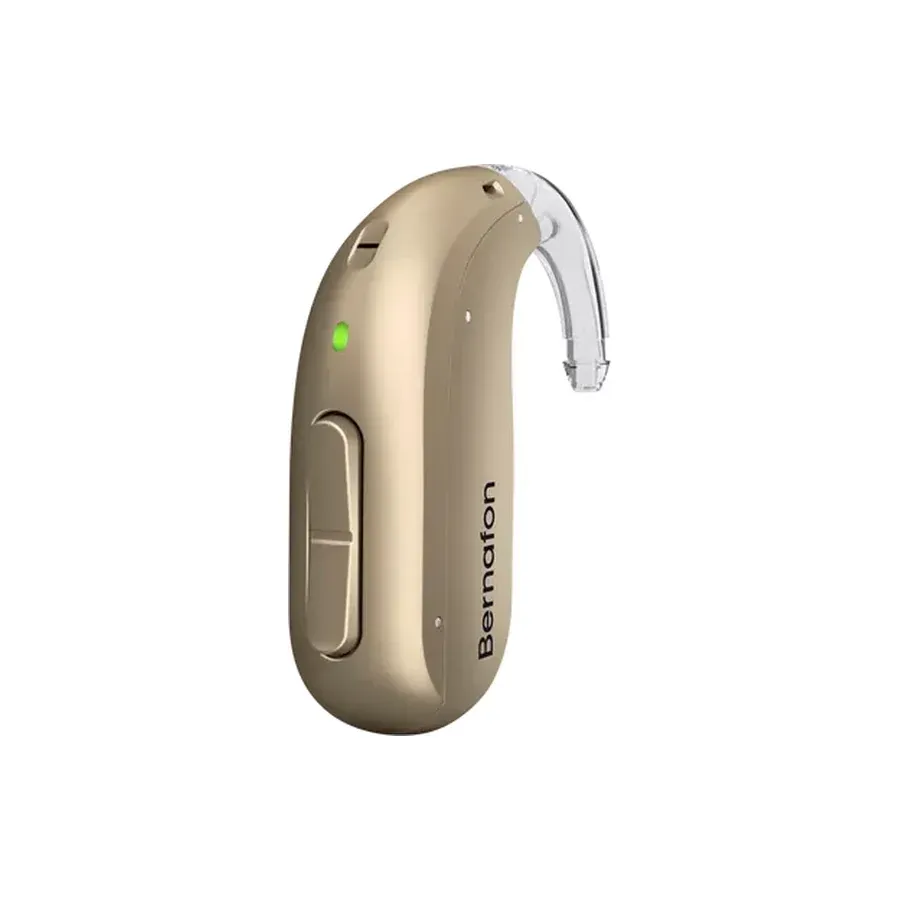
BTE
Behind-The-Ear · den klassiske model
Apparatet sidder bag øret og er forbundet til en øreprop via en slange. Konstruktionen er robust, der er plads til et større batteri, og den kan levere mere forstærkning end de øvrige typer.
Den bruges også, hvor øregangen ikke tåler at have en højttaler placeret i sig — for eksempel ved kronisk løbeøre. Til gengæld er den større og mere synlig, men netop derfor lettere at håndtere, hvis finmotorikken eller synet svigter.
Egner sig til moderate til svære høretab.
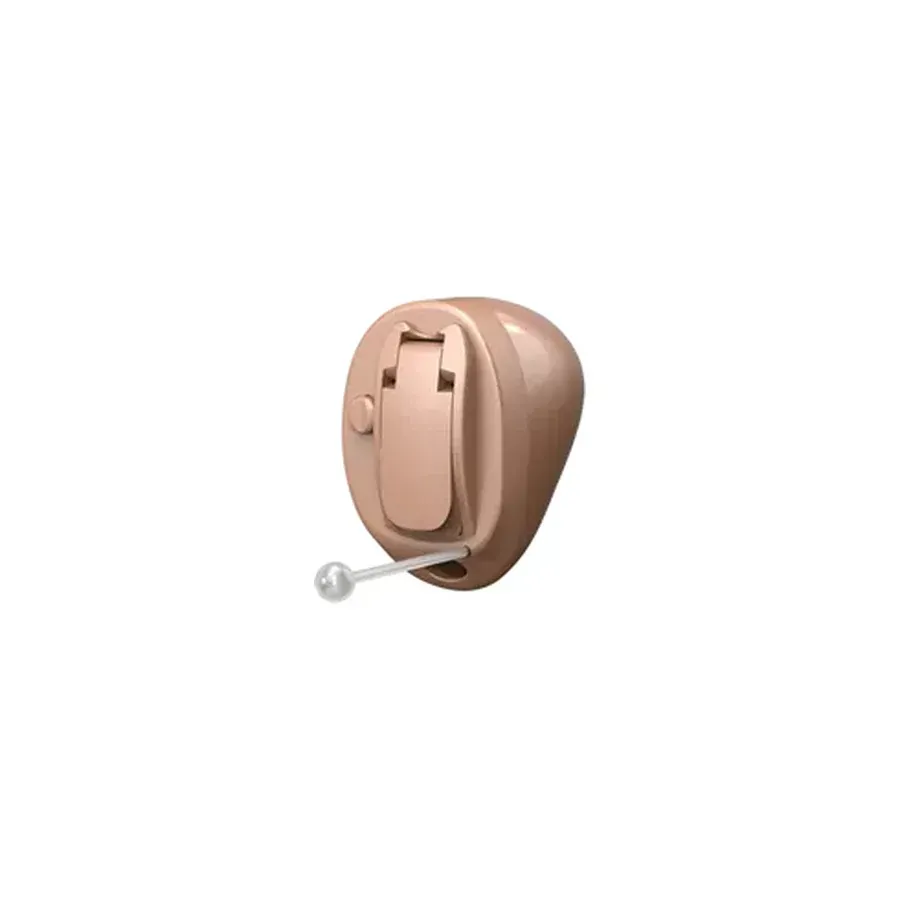
ITE
In-The-Ear · fremstillet efter aftryk af dit øre
ITE fremstilles individuelt efter et aftryk og sidder samlet i det ydre øre. Der er ingen del bag øret og ingen ledning, hvilket nogle foretrækker — særligt hvis man bruger briller eller maske.
Til gengæld er der mindre plads til mikrofoner, og det sætter en grænse for, hvor meget apparatet kan gøre med retningsvirkning i støj.
Egner sig til let til moderat høretab.
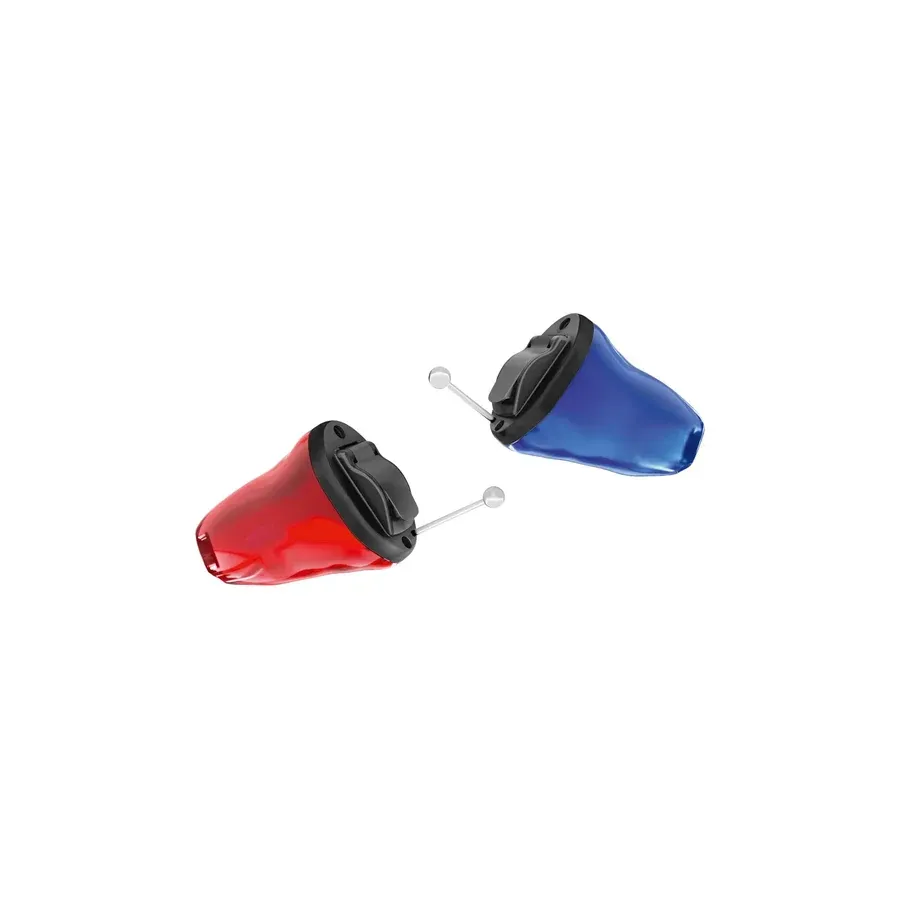
CIC og IIC
De usynlige høreapparater
Disse apparater placeres dybt i øregangen og er meget svære at se. Det er dem, folk mener, når de spørger efter usynlige høreapparater.
Prisen for størrelsen har traditionelt været færre funktioner: mindre batteri, mindre plads til mikrofoner og ingen mulighed for at streame lyd. Begrænsningerne findes stadig — ved større høretab kan et apparat inde i øregangen ikke levere forstærkning nok uden at hyle, og en snæver øregang kan simpelthen ikke rumme det.
Om det kan lade sig gøre, afgøres ved undersøgelsen — ikke på forhånd.
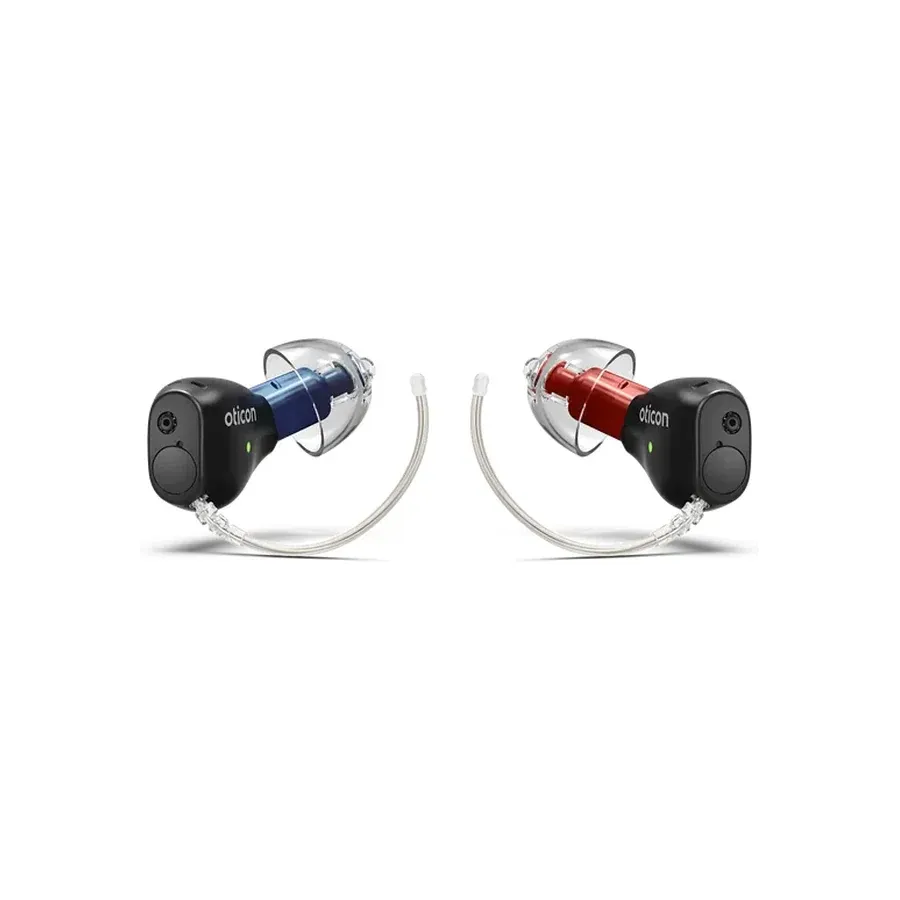
Usynlig og genopladelig
Oticon Zeal nxtCIC
Længe måtte man vælge mellem et apparat, der ikke kunne ses, og et apparat med fuld teknik. Zeal er blandt de første, der sidder helt inde i øregangen og samtidig er genopladeligt og kan streame lyd.
Apparatet har ikke teleslynge, og det passer i cirka to ud af tre øregange med standarddomes. Passer det ikke, laves en aftryk-tilpasset variant.
Findes i to teknologiniveauer og har sin egen kategori på vores prisoversigt.
Is the smallest hearing aid the best?
No. In the vast majority of cases, speech understanding is more important than how visible the hearing aid is.
It is worth being clear about the trade-off. A slightly larger hearing aid with room for more microphones performs better when several people are speaking at the same time. A very small hearing aid, on the other hand, is almost invisible.
For some people, discretion is so important that this is the right compromise. We simply make the differences clear so that you can make an informed choice.
How much do the different types cost?
The price depends on the technology level, not the style of hearing aid. An in-the-ear hearing aid costs the same as a comparable behind-the-ear model at the same technology level.
This means you can choose the style that best suits your ear and your everyday life without affecting the price. See the current prices in our hearing aid price overview.
What if a conventional hearing aid is not enough?
In most cases, a correctly fitted hearing aid provides good function and speech understanding. In cases of very severe or profound hearing loss, however, it may not be sufficient, and other solutions are available.
This is where it matters that our hearing clinic is located at a private hospital with its own ear, nose and throat department. If we identify any of the conditions below, we will advise you and arrange the appropriate referral.
Cochlear implant
A cochlear implant is a solution for people with severe or profound hearing loss where the hair cells in the inner ear no longer function sufficiently.
While a hearing aid amplifies sound, a cochlear implant converts sound into electrical impulses that directly stimulate the auditory nerve. Treatment requires assessment and surgery at a specialist department with expertise in this field.
Bone-anchored hearing aid (BAHA)
With a bone-anchored hearing aid, sound is transmitted through the bones of the skull directly to the inner ear rather than through the ear canal and middle ear.
It may be suitable for chronic middle ear problems, an absent or malformed ear canal, conductive or mixed hearing loss, and single-sided deafness. Treatment is provided in a hospital setting.
CROS and BiCROS for single-sided hearing loss
For single-sided deafness or a significant difference in hearing between the two ears, a CROS solution may be appropriate.
CROS stands for Contralateral Routing of Signal and works by picking up sound on the deaf side and transmitting it wirelessly to the hearing ear. BiCROS is used when hearing is also reduced in the better ear.
The solution can improve speech understanding in certain situations, but it does not restore directional hearing, which requires two functioning ears.
When hearing loss needs to be treated rather than amplified
Some types of hearing loss are caused by conditions that require medical or surgical treatment rather than a hearing aid. These include active middle ear infections, otosclerosis, sudden hearing loss, fluid in the middle ear and, in rare cases, a benign tumour affecting the auditory nerve.
In these cases, a hearing aid would amplify sound without addressing the underlying cause. This is why your hearing test is reviewed by a doctor before we fit a hearing aid.
How do you find out which type is right for you?
Through a hearing test and an examination of your ear.
We assess how much amplification you need, the shape of your ear canal and what you need in your everyday life. We then explain the advantages and limitations of the hearing aid types that are genuinely suitable for you.
And if your needs change later, you can usually switch to a different style within the same technology level.
Frequently Asked Questions
Which type of hearing aid is best?
There is no single type of hearing aid that is best for everyone. The right choice depends on the degree and type of hearing loss, the anatomy of your ear canal, your needs in noisy environments, and practical considerations such as handling and charging.
Is the smallest hearing aid the best?
Not necessarily. Very small hearing aids are discreet, but they have less space for microphones and batteries. In many cases, a slightly larger model can provide better speech understanding in noisy environments.
What is the difference between RIC and ITE?
RIC has the speaker placed in the ear canal and the device itself behind the ear, which makes room for more technology. ITE sits together in the outer ear and is easier to handle, but has less space for microphones.
Can everyone get invisible hearing aids?
No. The size of the ear canal and the degree of hearing loss are important. With greater hearing loss, a device inside the ear canal cannot provide enough amplification, and a narrow ear canal cannot accommodate it.
Does an invisible hearing aid cost more?
No. The price depends on the technology level, not the style. An in-the-ear-canal hearing aid costs the same as a comparable behind-the-ear model at the same technology level.
Are rechargeable hearing aids just as powerful?
Yes. Modern rechargeable hearing aids offer the same level of technology as battery-powered models. The choice mainly comes down to practical handling and convenience.
Can I switch to a different type later?
Yes. If your needs or preferences change, you can usually switch to a different style within the same technology level.
Can I use a hearing aid if I have ear discharge?
Often, yes, but the type of hearing aid matters. A device that blocks the ear canal can make the problem worse, so a behind-the-ear hearing aid with an open fitting is often a better option. This should be assessed individually.
When is a cochlear implant or BAHA appropriate?
For severe or profound hearing loss, where conventional hearing aids are not sufficient, or when the ear canal and middle ear cannot conduct sound effectively. Both options require assessment and treatment in a hospital setting.
How do I know which type of hearing aid is right for me?
The right type is determined through a combination of a hearing test, an examination of your ears, and a review of your everyday hearing needs. We will go through the available options with you before you make a decision.
Read also about
- Hearing aids and private hearing clinic in Charlottenlund
- Hearing aid prices
- Grants, rules and rights
- Oticon Zeal nxtCIC