


Chronic Sinusitis (Chronic Rhinosinusitis): Assessment and Surgery (FESS)
Chronic sinusitis is a long-term inflammatory condition affecting the lining of the nose and sinuses. It can cause nasal congestion, facial pressure, nasal discharge and often a reduced sense of smell. Most patients can be treated with medication and nasal rinsing. When this is not sufficient, endoscopic sinus surgery may be considered.
At Charlottenlund Private Hospital, assessment and medical treatment are provided by specialists in ear, nose and throat conditions at several locations across Denmark, while surgical procedures are performed in Charlottenlund.
What is chronic sinusitis?
The sinuses are air-filled cavities in the bones of the face – the frontal sinuses, maxillary sinuses, ethmoid cells and sphenoid sinuses – all of which drain into the nose through narrow openings. In chronic sinusitis, the lining of the nose and sinuses remains swollen and inflamed, causing these drainage pathways to become blocked.
The condition is considered chronic when symptoms have lasted for more than 12 weeks. According to a review article in Ugeskrift for Læger, around 9% of people in Denmark have chronic sinusitis when the diagnosis is based on both symptoms and endoscopic examination, and around 4% have nasal polyps – meaning just under half of all cases.
Chronic sinusitis is not an ordinary infection but a persistent inflammatory reaction in the mucous membrane. For this reason, it is generally not treated with antibiotics.
What symptoms does chronic sinusitis cause?
According to the European guidelines (EPOS 2020), the diagnosis is made when at least two of the following symptoms have been present for more than 12 weeks, one of which must be nasal congestion or nasal discharge: blocked nose, discharge from the nose or down the throat, facial pressure or pain and reduced sense of smell.
Many people also experience fatigue, coughing and poor sleep. Headache alone is rarely caused by the sinuses; pressure over the forehead and cheeks together with nasal congestion and discharge is more suggestive of sinus disease.
The symptoms must be confirmed by an endoscopic examination of the nose or a CT scan before the diagnosis can be established with certainty.
- Blocked nose
- Discharge from the nose or down the throat
- Facial pressure or pain
- Reduced sense of smell
What is the difference between acute and chronic sinusitis – and how long does it last?
Acute sinusitis typically develops in connection with a cold, causes pain and sometimes fever, and in the vast majority of cases resolves on its own within 7–10 days. It is treated by your GP.
If symptoms persist for more than 12 weeks, the condition is considered chronic sinusitis and should be assessed by an ear, nose and throat specialist. If you experience many episodes of acute sinusitis each year, surgery to open the drainage pathways may in some cases help prevent new episodes.
What are frontal sinusitis and maxillary sinusitis?
Inflammation can affect one or more of the sinuses. If it affects the frontal sinuses, pressure and pain are felt above the eyebrows, often worsening when bending forward; this is called frontal sinusitis.
If it affects the maxillary sinuses, pressure is felt in the cheeks and sometimes there is tenderness in the upper teeth; this is called maxillary sinusitis.
One-sided maxillary sinusitis may originate from the root of a tooth and should therefore be assessed by a dentist. In chronic sinusitis, the ethmoid cells between the eyes are almost always involved, and this is also where nasal polyps most commonly develop.

How are the sinuses examined?
The examination consists of a consultation and an endoscopic examination of the nose. The specialist looks for swollen mucous membranes, discharge and nasal polyps and assesses whether a deviated nasal septum or enlarged nasal turbinates may be contributing to the symptoms.
If allergy is suspected, the assessment is supplemented with allergy testing, and if there are symptoms of asthma, the patient is referred to their GP.
Before surgery, a CT scan of the sinuses must be available. According to the Danish Rhinological Society, the scan must be no more than one year old.
CT scans are not performed at Charlottenlund Private Hospital. The specialist either refers the patient for a scan or obtains a scan that has already been performed. The preliminary examination can take place at several of the hospital's locations across Denmark.
How is chronic sinusitis treated without surgery?
First-line treatment consists of daily nasal rinsing with saline and a corticosteroid nasal spray, which reduces inflammation in the mucous membrane.
In patients with nasal polyps or more severe symptoms, additional treatment may be prescribed for a period based on the specialist's assessment. Antibiotics are not routinely recommended.
Treatment is initiated and followed up at Charlottenlund Private Hospital, and many patients are able to achieve a low level of symptoms with consistent medical treatment.
Surgery is only considered when medical treatment has not provided sufficient relief. Biological medicines for severe nasal polyps are only administered in the public hospital system; patients are referred there if this treatment is indicated.
How is sinus surgery performed (ESS, FESS and CAS-FESS)?
The procedure is called endoscopic sinus surgery (ESS) – previously referred to as FESS, Functional Endoscopic Sinus Surgery – and CAS-FESS when the surgeon uses computer-assisted navigation (Computer Assisted Surgery), which shows the position of the surgical instruments on the patient's own CT scan during the procedure.
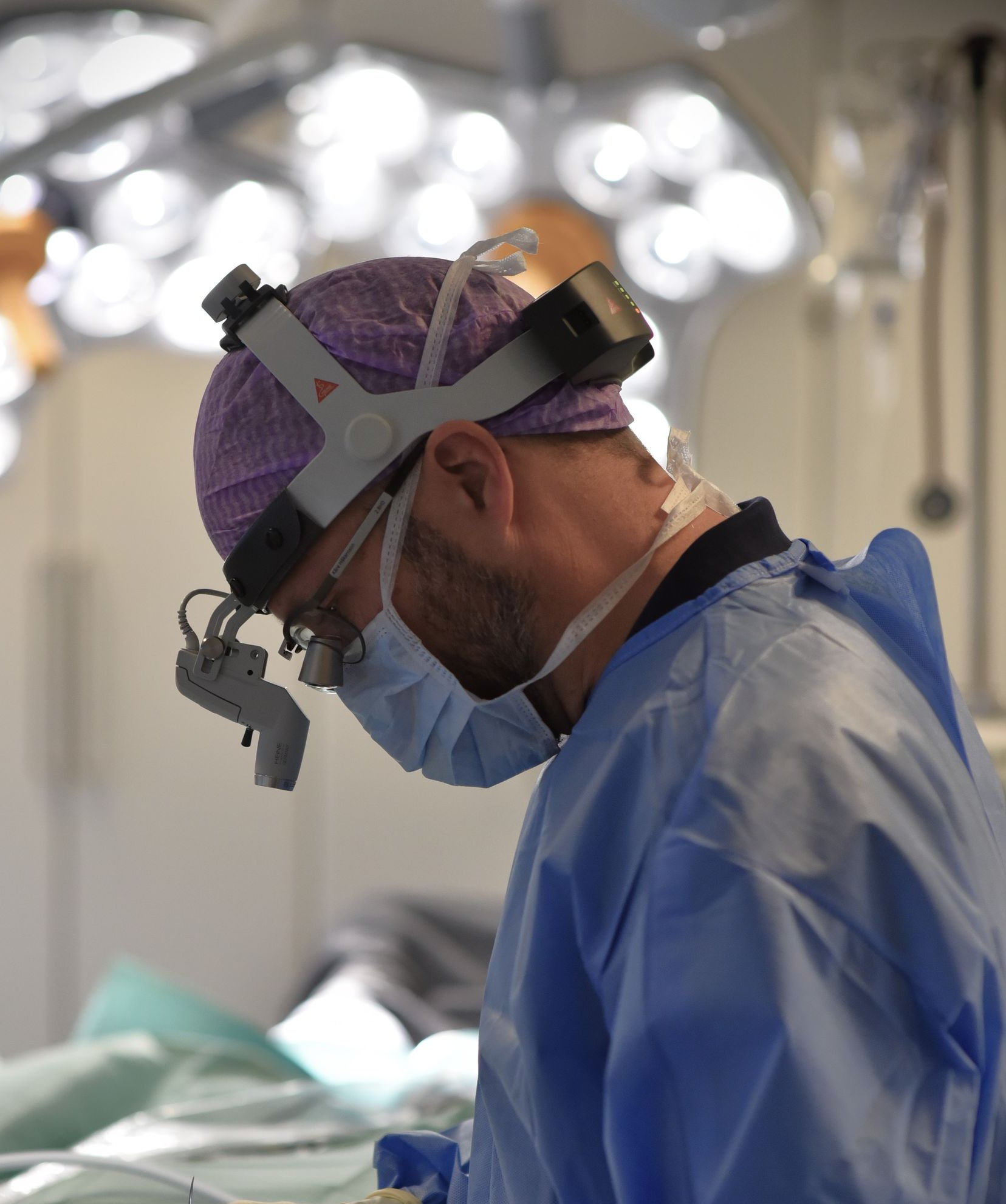
The operation is performed through the nostrils under general anaesthesia and takes approximately one and a half hours. The aim is to create lasting drainage from the sinuses into the nose by widening the natural openings and removing polyps and inflamed tissue.
At Charlottenlund Private Hospital, all of the sinuses are opened in most cases, and computer-assisted navigation is used. If there is also a deviated nasal septum or enlarged nasal turbinates, these can be corrected during the same anaesthetic if this has been agreed during the preliminary examination.
The operations are performed in the surgical department in Charlottenlund.
How long do you need to take off work after sinus surgery?
After surgery, you are observed for a few hours and usually go home the same day. An overnight stay is only rarely necessary.
During the first few days, the nose will feel blocked and there may be blood-stained discharge. Most patients take around one week off work, depending on the type of work they do.
There are two follow-up appointments: after approximately 10 days, when the nose is examined and cleaned, and after approximately two months. An additional follow-up after one year with your own ear, nose and throat specialist is recommended.
Surgery does not remove the underlying cause of the inflammation, so corticosteroid nasal spray and saline rinsing are usually continued afterwards.
Nasal polyps can recur. According to Danish data compiled by the
Danish Medicines Council, around 18% of patients undergo another operation over the following years.
The treatment pathway at Charlottenlund Private Hospital
The treatment pathway begins with a preliminary examination by an ear, nose and throat specialist – either in Charlottenlund or at one of the hospital's other locations.
A plan for medical treatment is established and the effect is followed over time. If surgery becomes relevant, the CT scan is reviewed and the extent of the procedure is agreed.
The operation is performed in Charlottenlund by specialists with expertise in sinus surgery, including Jacob Fisker and Kåre Håkansson.
Follow-up appointments take place approximately 10 days and two months after surgery.
Frequently asked questions
What is chronic sinusitis?
The sinuses consist of the frontal, ethmoid, maxillary and sphenoid sinuses, which are air-filled cavities in the skull where inflammation can develop. The sinuses are connected to the nose, and when inflammation occurs, these drainage pathways can become blocked. If the condition lasts for more than 12 weeks, it is referred to as chronic sinusitis.
The symptoms of chronic sinusitis can closely resemble those of a common cold. People with chronic sinusitis may experience a feeling of heaviness and pressure around the nose, facial pain, reduced sense of smell, nasal congestion, nasal discharge and difficulty breathing through the nose. This happens because the inflammation blocks the drainage pathways between the sinuses and the nose. Symptoms may occur on one or both sides of the face.
How does chronic sinusitis develop?
Chronic sinusitis is a common condition affecting around 9% of the population. There are many possible causes, including allergies, narrow sinus drainage pathways, a deviated nasal septum, smoking and nasal polyps. In some cases, no specific cause can be identified.
Acute sinusitis is a short-term condition that causes pain and sometimes fever and is usually caused by an infection. It typically develops in connection with a cold and lasts for a few weeks before resolving. If a person experiences frequent episodes of acute sinusitis, surgery to open the sinuses may in some cases be offered to help prevent further episodes.
In the vast majority of cases, acute sinusitis resolves on its own within 7–10 days. However, some people may continue to have inflammation and mucus in the sinuses. If this persists for more than 12 weeks, the condition is considered chronic sinusitis and may require medical treatment or surgery.
What is the function of the sinuses?
If you feel the forehead, both sides of the nose and the area between the eyes and the nose, you might assume that the facial bones in these areas are solid. However, they are not. Between the outer and inner surfaces of the bone are air-filled cavities known as the sinuses.
It is not fully understood why we have sinuses. Some theories suggest that these air-filled cavities help reduce the weight of the skull, while others propose that they act somewhat like the crumple zone of a car, helping to absorb trauma to the forehead and nose before it reaches the brain. We know that sinus surgery does not affect the resonance of the voice, and the sinuses do not have a function in the nose.
How long do you need to take off work after sinus surgery?
Most patients take around one week off work, depending on the type of work they do. You can usually go home the same day, with follow-up appointments after approximately 10 days and two months.
Do you need a CT scan before sinus surgery?
Yes. A CT scan of the sinuses must be available and must be no more than one year old. CT scans are not performed at Charlottenlund Private Hospital; the specialist will either refer you for a scan or obtain an existing scan.
Can nasal polyps return after surgery?
Yes. Surgery does not remove the underlying cause of the inflammation, so nasal spray and saline rinsing are usually continued afterwards. According to Danish data, around 18% of patients undergo another operation over the following years.