


Hearing loss
Choose Charlottenlund Private Hospital for examination and treatment of hearing loss in both children and adults.
For many people, hearing loss develops gradually over the years, but hearing loss can also occur suddenly, such as in connection with an infection, a plug in the ear, or after flying and diving, where the ear is exposed to pressure. Fortunately, there are good treatment options for both types of hearing loss.
If you or those around you have become aware that your hearing may have worsened over time, or you are experiencing sudden hearing loss - it is important to have the cause of the hearing loss investigated so that it can be treated, regardless of the cause.
At Charlottenlund Private Hospital we treat all types of hearing loss. You are always welcome to contact us if you have any questions or would like to make an appointment.
Some of the most common causes of hearing loss are:
Age-Related Hearing Loss (Presbycusis)
Age is one of the most common causes of hearing loss. Just like our other senses and bodily functions, our hearing naturally declines as we age, making it harder to follow everyday conversations or detect high-pitched sounds. This is a completely natural process that affects the majority of older adults. In many cases, this can be highly effectively corrected with a modern hearing aid, while in other specific cases, surgical options may be considered.
Infections
Ear infections—such as acute otitis media (middle ear infection) or otitis externa (ear canal infection)—frequently cause temporary hearing loss while the infection is active. Hearing is reduced because swelling closes the ear canal, or because sticky fluid and inflammation build up in the middle ear, dampening the vibration of the eardrum.
Hearing loss of this nature is temporary and should never be treated with a hearing aid. Instead, it is managed by treating the underlying infection, practicing frequent pressure equalization, or, in persistent cases, inserting a tiny ear tube (grommet) to drain the fluid.
Earwax Buildup
An accumulation of earwax can easily create a physical plug in the ear canal, causing sudden muffled hearing. Ironically, the most common cause of this buildup is the use of cotton swabs (Q-tips), which inadvertently push the wax deeper into the ear canal and compact it into a tight plug.
Even if you are quite certain your hearing loss is just due to earwax, many other ear conditions can present with the exact same symptoms. That is why every consultation at Charlottenlund Privathospital begins with a comprehensive hearing test. Our extensive clinical experience shows that many patients who suspect a simple wax plug are actually experiencing a different issue altogether—such as fluid accumulation in the middle ear. We conduct these tests to ensure we never miss an underlying diagnosis.
Noise-Induced Hearing Loss (Acoustic Trauma)
Hearing loss can also result from exposure to sound of exceptionally high intensity or prolonged duration. This can happen in two ways:
- Acute Acoustic Trauma: Exposure to a sudden, extremely loud sound close to the ear, such as a firecracker, a speaker at a concert, or even a bicycle tire bursting.
- Chronic Noise Damage: Prolonged exposure to moderate noise levels over many months or years (often occupational) that gradually wears down the delicate hair cells in the inner ear.
A thorough hearing test can easily determine if you have suffered noise damage, which is very frequently accompanied by tinnitus (ringing or buzzing in the ears).
Rare Causes
Beyond these common factors, there are various rarer causes of hearing loss that require specialized diagnostic investigations to uncover. At Charlottenlund Privathospital, you and your loved ones are in expert hands. We look forward to welcoming you and providing a thorough, reassuring examination and a personalized treatment plan.
Read also about:
Drainage in the eardrum
Tinnitus
Frequently Asked Questions
Hvorfor opstår nedsat hørelse?
Why does hearing loss occur?
Hearing loss can occur for many different reasons, and it can affect both adults and children. This means that you may have difficulty hearing normally, even when there is not much background noise. There are several factors that can lead to hearing loss, and they can be temporary or permanent.
1. Age-related hearing loss (presbyacusis):
One of the most common causes of hearing loss is natural aging. As we age, the tiny hair cells in the inner ear that help us perceive sound can become damaged or die. This can lead to a gradual loss of hearing, especially at high frequencies, which can make it harder to understand speech.
2. Noise damage:
Prolonged exposure to loud noises, such as music, machinery noises, or loud concerts, can damage the hair cells in the inner ear. Once these cells are damaged, they cannot repair themselves, which can lead to permanent hearing loss. Noise damage is one of the most common causes of hearing loss among young adults.
3. Ear infections and fluid in the ear:
Temporary hearing loss can occur if there is fluid or inflammation in the middle ear, such as from an ear infection. The fluid can prevent sound from reaching the inner ear, creating a kind of "blockage" that makes it difficult to hear clearly. This can often be treated with medication or antibiotics.
4. Earwax:
Too much earwax in the ear can block sound from reaching the eardrum, which can lead to temporary hearing loss. Earwax can be safely removed by a doctor or an ear specialist.
5. Injuries to the ear or head:
Trauma or injury to the ear or head can damage the structures responsible for picking up and sending sounds to the brain. If the injury affects the inner ear, auditory nerve, or eardrum, it can lead to hearing loss.
6. Hereditary factors:
Some people are born with hearing loss or develop it later in life due to genetic factors. Hereditary diseases can affect the parts of the ear that are needed to pick up and process sound.
7. Medical conditions:
Certain diseases and conditions, such as diabetes, high blood pressure, or infections, can affect hearing. In some cases, medications, especially certain antibiotics or chemotherapy drugs, can also have side effects that damage hearing.
8. Tumors and other diseases of the ear or brain:
Although rare, tumors or other growths in the ear or brain can affect hearing. This can be more serious and require medical treatment.
How can hearing loss be helped?
Treatment depends on the cause of the hearing loss. In some cases, hearing loss can be treated with medication, surgery, or hearing aids. It is therefore important to have a thorough examination by a doctor if you are experiencing hearing problems so that the cause can be found and treated in the best possible way.
Conclusion:
Hearing loss can occur for many different reasons, from age-related hearing loss to infections or noise damage. If you are experiencing problems with your hearing, it is important to get help quickly so that you can get the right treatment and possibly improve your quality of life.
Watch Sundhed.dk's animation about what happens in the ear when hearing loss occurs.
How do we test your hearing?
An ear, nose and throat specialist (otolaryngologist) or an audiologist (hearing specialist) uses several different methods to test for hearing loss. The examination will typically involve both a thorough discussion about your symptoms and a series of tests to assess how your ears are working. Here is a description of how the examination is usually done:
1. Anamnesis (medical history)
First, the specialist will ask you about your symptoms and medical history. This may include questions such as:
- When did you start noticing hearing problems?
- Are there any specific situations where you have difficulty hearing (e.g. in noisy environments, when talking to certain people)?
- Have you experienced ear pain, ringing in the ears (tinnitus), dizziness or other symptoms that could be related to your hearing problems?
- Is there any family history of hearing loss or other ear problems?
- Have you been exposed to loud noise, or have you had ear infections in the past?
This information helps the doctor understand what type of hearing loss you may have and what further investigation is necessary.
2. Examination of the ear
The doctor will typically look inside your ears using an otoscope or a large overhead ear microscope – an instrument with a small camera and light that provides a clear view of the ear canal and eardrum. This examination can reveal:
- Earwax, which can block sound and cause temporary hearing loss.
- Signs of infection or inflammation that may affect hearing.
- Damage to the eardrum (e.g. hole or scar tissue).
- Signs of fluid in the middle ear (as in otitis media).
3. Hearing test (Audiometry)
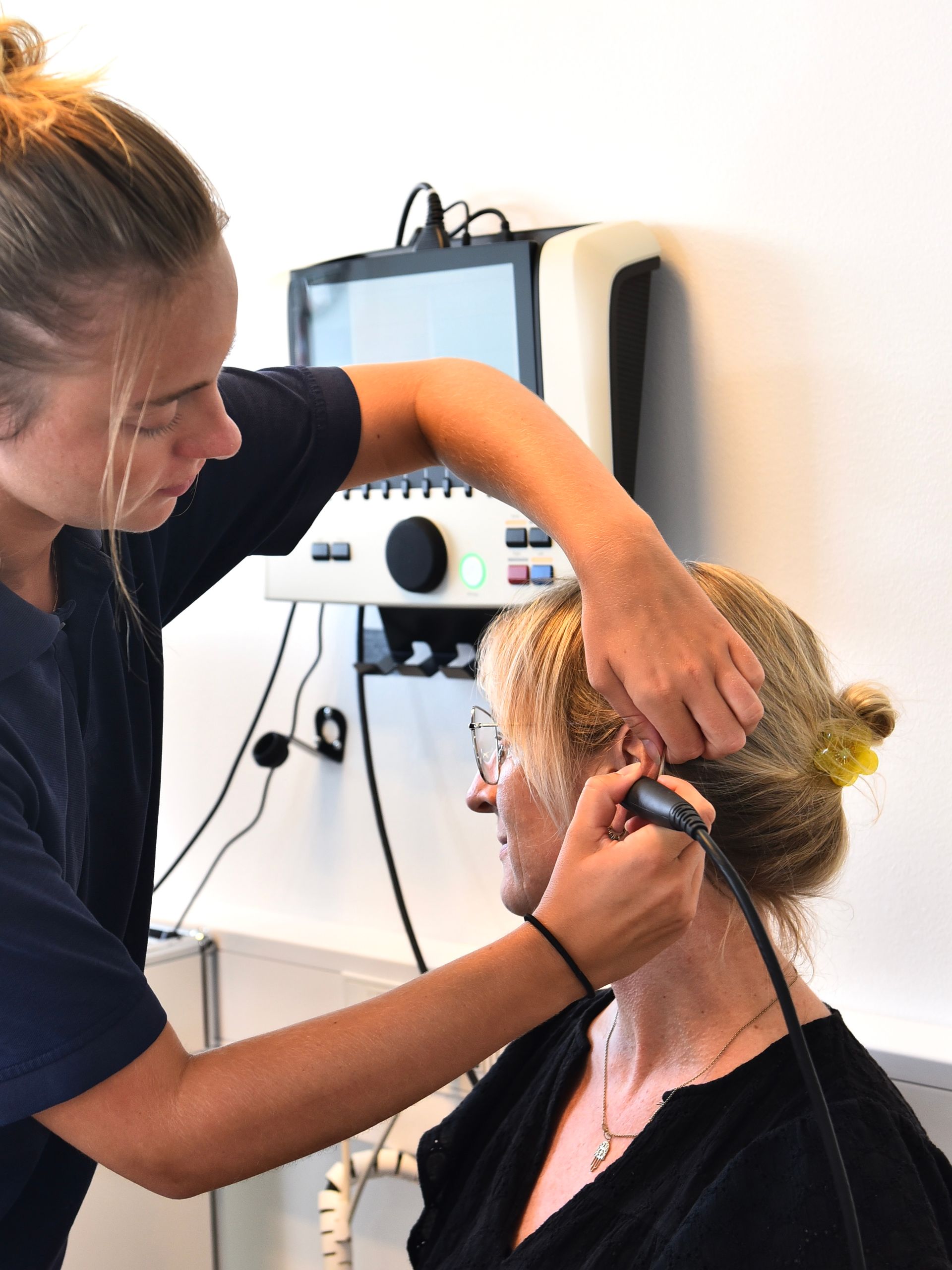
To assess the extent of your hearing loss, your specialist will often refer you to an audiologist for a hearing test. This may include different types of tests where you will be asked to respond to sounds at different frequencies and volumes:
Tone audiometry:
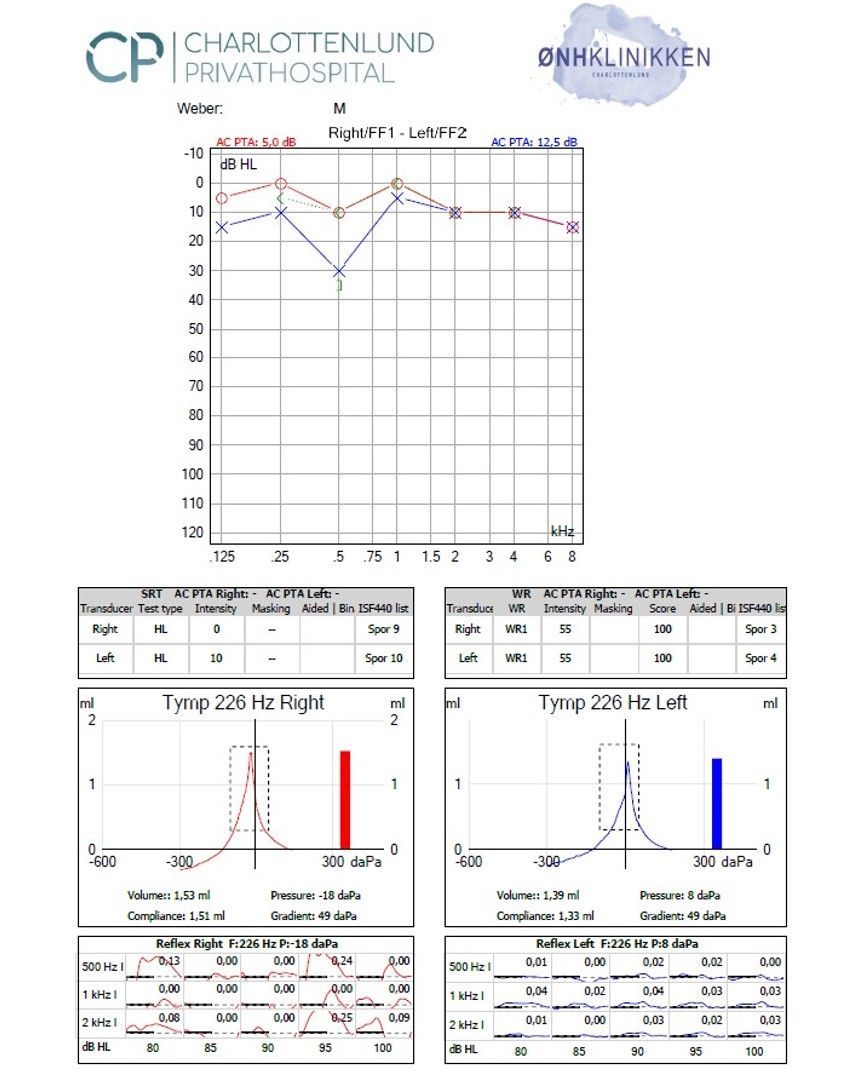
You will hear a series of sounds (tones) at different frequencies (i.e. high and low tones) and at different levels of intensity (i.e. volume). You will be asked to press a button or signal when you can hear the sounds. This helps determine the type and degree of hearing loss you have.
Tale-audiometry:
You will be asked to repeat words or phrases that you hear through headphones. This can help assess how well you understand speech at different volumes.
Sound conduction and bone conduction:
In some cases, the doctor may use bone conduction headphones, which are sent through the bones of the skull instead of the ear canal. This can help determine whether the problem is in the outer or middle ear (conduction) or in the inner ear or auditory nerve (sensorineural hearing loss).
Impedance audiometry (tympanometry)
This test examines how the eardrum responds to changes in air pressure in the ear. It can help detect problems such as fluid in the middle ear (as in otitis media), which can affect hearing. The test can also show if there are problems with the movable bones (ossicles) in the middle ear that transmit sound to the inner ear.
Tinnitus examination (ringing in the ears)
If you have tinnitus (ringing in the ears), your doctor may also do tests to assess how this is affecting your hearing. There are different types of tests for tinnitus, including questionnaires and tests that assess your reaction to specific sounds.
Further investigations (if necessary)
Depending on the results of the initial tests, the specialist may decide to refer you for further examinations, such as:
MRI scan or CT scan:
If the doctor suspects that hearing loss is due to a tumor, injury or disease in the brain or ear, you may be referred for a scan.
Treatment options
Once the examination is complete, the specialist will explain what is causing your hearing loss and discuss possible treatment options. Depending on the cause, treatment may include:
- Removal of earwax.
- Medical treatment of infections or inflammatory conditions.
- Use of hearing aids or other assistive devices.
- Surgical interventions if there is an underlying anatomical cause (e.g. perforated eardrum or tumor).
Conclusion
A hearing loss assessment is a multi-step process, with the specialist using a combination of an interview, physical examination and hearing tests to find out what is causing the problem. It is important to have any hearing problems assessed early, as treatment can improve hearing and prevent the problem from getting worse.
When should I get a hearing aid?
When should people with hearing loss get hearing aids?
Hearing aids are a useful tool for many people who experience hearing loss, but not everyone with hearing loss necessarily needs a hearing aid. The decision to get a hearing aid depends on several factors, including the degree of hearing loss, what situations it affects, and how it affects one's quality of life.
Here are some conditions that may indicate that it may be time to consider a hearing aid:
1. When hearing loss affects daily life
If you have difficulty hearing conversations, especially in noisy environments, such as restaurants, work, or home, it may be a sign that your hearing loss is starting to affect your ability to communicate effectively. If you often have to ask people to repeat themselves, or if you feel left out of conversations, a hearing aid can help improve your hearing and communication.
2. When you experience difficulty hearing loud or soft sounds
If you have trouble hearing certain frequencies, such as high-pitched speech (such as women's or children's voices) or low-pitched sounds (such as low-pitched sounds like cars or doorbells), a hearing aid can help amplify the sounds you have difficulty hearing. This is especially true with age-related hearing loss, where high-frequency hearing is often the first to deteriorate.
3. When you start isolating yourself
Hearing loss can lead to social isolation. If you find yourself avoiding situations where you need to communicate, such as social gatherings, phone calls, or meetings, because it becomes too difficult to hear or follow conversations, it may be a sign that hearing aids may be a good solution. When hearing loss affects your social quality of life, it is often time to consider assistive devices such as hearing aids.
4. When you feel tired or stressed from having to "hear more"
Straining to hear all the time can lead to fatigue, headaches and stress. If you often feel exhausted after trying to listen, or if you start to avoid situations where you need to concentrate on hearing, a hearing aid can reduce this strain and make it easier to hear without requiring as much energy.
5. When hearing affects your safety
In some cases, hearing loss can be dangerous, especially if it means you can't hear warning sounds like car horns, fire alarms, or doorbells. If your hearing loss affects your ability to react quickly to the outside world, a hearing aid can help increase your awareness of sounds that are important for your safety.
6. When a doctor recommends it
An audiologist or ear doctor will typically recommend a hearing aid if a hearing test shows that your hearing loss is within a level where a hearing aid can help. This can be a way to improve both your hearing and your quality of life. Often, the doctor or audiologist will discuss with you how a hearing aid can improve your hearing and provide you with the best solution for your needs.
In summary
It’s not necessarily a question of whether you have hearing loss – many people experience some degree of hearing loss as they age – but rather how much it affects your life. If your hearing loss makes it difficult to hear in everyday situations, if you feel tired from straining to hear, or if it affects your social life or safety, a hearing aid may be a good solution. It’s important to talk to a professional about your symptoms so you can get the right assessment and support to decide if a hearing aid would be helpful for you.
Book an appointment for hearing loss treatment
If you suffer from hearing loss and would like to be treated with us, please contact us. Our secretaries are ready to help and answer any questions you may have, as well as to find time for both a preliminary examination and surgery.