


Virus on the balance nerve
(Vestibular Neuritis)
We are ready!
Despite its common name, a "virus on the balance nerve"—medically known as vestibular neuritis—is not an active viral infection. Instead, it is a sudden inflammation of the vestibular nerve in the inner ear. It triggers severe, long-term vertigo, leaving patients with a persistent sensation of intense seasickness and vomiting that lasts for several days, followed by a gradual recovery period spanning several weeks.
The Importance of a Fast, Accurate Diagnosis
A swift and precise diagnosis is absolutely critical for two vital reasons:
- Time-Sensitive Treatment: Medical treatment for vestibular neuritis (typically a targeted course of corticosteroids) is highly effective, but it must be initiated within 48 to 72 hours of the onset of symptoms to minimize long-term nerve damage.
- Ruling Out a Stroke: Certain types of strokes (caused by a blood clot in the brain) can mimic the exact symptoms of vestibular neuritis. Differentiating between the two quickly is life-saving.
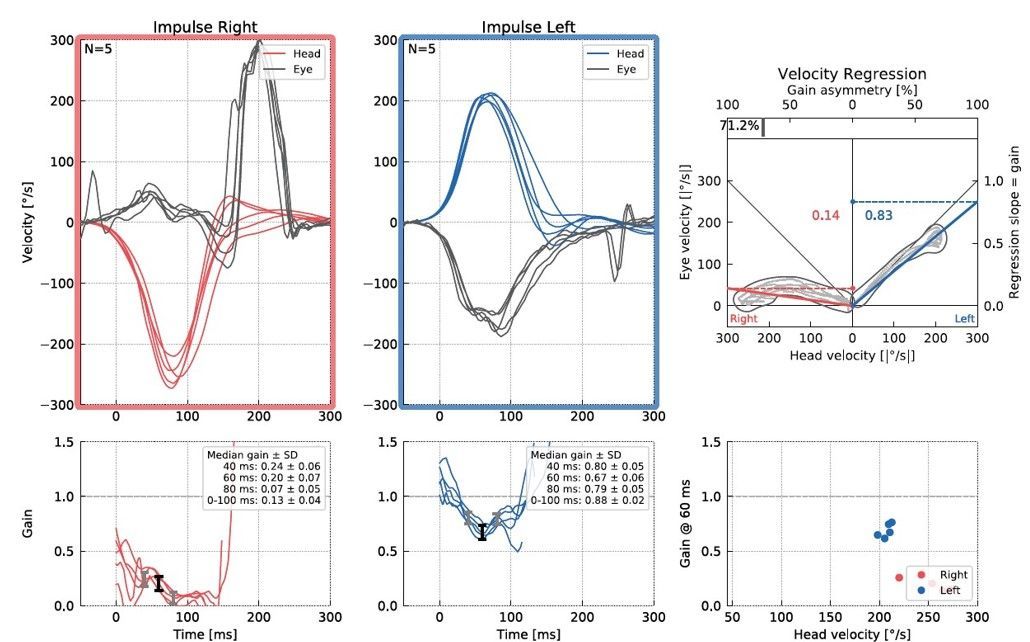
At Charlottenlund Privathospital, we perform thorough neurological and balance examinations using state-of-the-art vHIT (Video Head Impulse Test) technology from Interacoustics. This advanced, non-invasive diagnostic equipment allows our specialists to evaluate your balance system in real time, ruling out more serious central brain conditions with an exceptionally high degree of clinical certainty.
Emergency Appointments Available
Because early intervention is so crucial, Charlottenlund Privathospital maintains dedicated emergency appointments for patients experiencing acute, severe dizziness. Our rapid-access diagnostics ensure you receive the correct treatment immediately while safely ruling out other serious medical emergencies.
Read also about:
Loose ear stones (BPPV)
Meniere's syndrome
Frequently Asked Questions
Does a virus infect the balance nerve?
Fortunately, a virus on the balance nerve is not a virus at all. The condition that we call a virus on the balance nerve in Danish is not a virus at all. In English, it is called a "vestibular neuritis" - that is, an irritation of the nerve or organ - and that is what we doctors also call the condition in medical language.
In other words, there is no evidence at all that the condition is a virus or can be contagious.
Virus on the balance nerve is thus just a slightly unfortunate term for a dizziness condition that occurs out of the blue, where the patient is extremely dizzy, nauseated and typically vomits - completely as if you were seasick. Normally it goes away on its own, but since the symptoms can also be triggered by a blood clot in the brain, cerebellum or brainstem, it is important to be thoroughly examined as soon as possible.
At Charlottenlund Private Hospital, the specialists have access to advanced VHIT equipment, which large studies have shown - together with a thorough neurological examination - can rule out blood clots and cerebral hemorrhage with greater certainty than both CT and MRI scans combined.
How long should I expect it to last?
You are usually really unwell for the first two days, when most people are practically lying on the toilet, unable to get out of the house. Most patients therefore only come to the doctor after a few days, as they are simply too unwell for the first few days. After this, many experience gradual improvement over the following weeks - but the consequences of a virus on the balance nerve can extend over many months. However, many recover completely and a quick effort with rehabilitation is important for a good result. Your specialist at Charlottenlund Private Hospital will therefore always provide exercises that you can start with.
Could there be something else wrong?
Yes. The symptoms of a virus affecting the balance nerve can be difficult to distinguish from a blood clot in the cerebellum. Although you typically get a CT scan and sometimes an MRI scan in the emergency room, it is only when an ear, nose and throat specialist has examined you with VHIT glasses that you can be 100% sure that there is nothing else wrong. That is why it is also important to be examined by a specialist as soon as possible.
At Charlottenlund Private Hospital, all specialists are trained in using the VHIT glasses, ensuring you receive a thorough and reliable diagnosis.
Book an appointment for treatment of a virus on the balance nerve
If you suffer from a virus on the balance nerve and would like to be treated with us, you are welcome to contact us. Our secretaries are ready to help and answer any questions you may have, as well as finding time for both a preliminary examination and surgery.