


Dermatology
Skin conditions can affect both quality of life and general well-being. At Charlottenlund Private Hospital, we offer examination and treatment of conditions affecting the skin, hair and nails, including both acute and chronic skin disorders.
Eczema
Child eczema, hand eczema, contact dermatitis
Birthmarks
Acne
Rosacea
Psoriasis
WHEN SHOULD YOU SEEK AN ASSESSMENT?
It may be appropriate to consult a dermatologist if you have persistent skin changes, unexplained itching, new or changing moles, hair loss or other symptoms affecting the skin, hair or nails.
Early assessment can often lead to faster diagnosis and treatment.
Symptoms you should be aware of:
- Redness and rash
May be localised or widespread and is often accompanied by itching or a stinging sensation. - Itching
A common and troublesome symptom of many skin conditions, such as eczema or hives. - Scaling and thickened skin
Often seen in chronic skin conditions such as psoriasis. - Spots, bumps and blisters
May vary in colour and appearance depending on the condition. - Changes in pigmentation
Dark or light areas of skin, for example in melasma or vitiligo. - Sores and slow healing
May occur particularly in cases of skin cancer, diabetes or infections. - Changes in the nails and hair
For example, thickened nails, nail loss, brittle nails or patchy hair loss. - Pain, stinging or a burning sensation
May occur with both infectious and inflammatory conditions. - Changes in the mucous membranes
For example, in autoimmune skin conditions that may affect both the skin and mucous membranes.
We can help with:
- Acne and rosacea
- Eczema, including atopic eczema and contact dermatitis
- Psoriasis and psoriatic arthritis
- Skin cancer, including basal cell carcinoma, squamous cell carcinoma and melanoma
- Sun damage and actinic keratoses
- Pigmentation disorders, including melasma and vitiligo
- Hair loss, including alopecia areata and androgenetic alopecia
- Autoimmune skin conditions, such as lupus and lichen planus
- Blistering diseases, including pemphigus and bullous pemphigoid
- Skin infections, including bacterial, viral and fungal infections
How a consultation with a dermatologist takes place
A dermatology consultation typically lasts around 30 minutes and takes place at our private hospital in Charlottenlund. The dermatology specialist will review your symptoms and medical history to gain a clear understanding of your skin condition.
This is followed by a thorough examination of the skin, hair, nails and any changes affecting the mucous membranes.
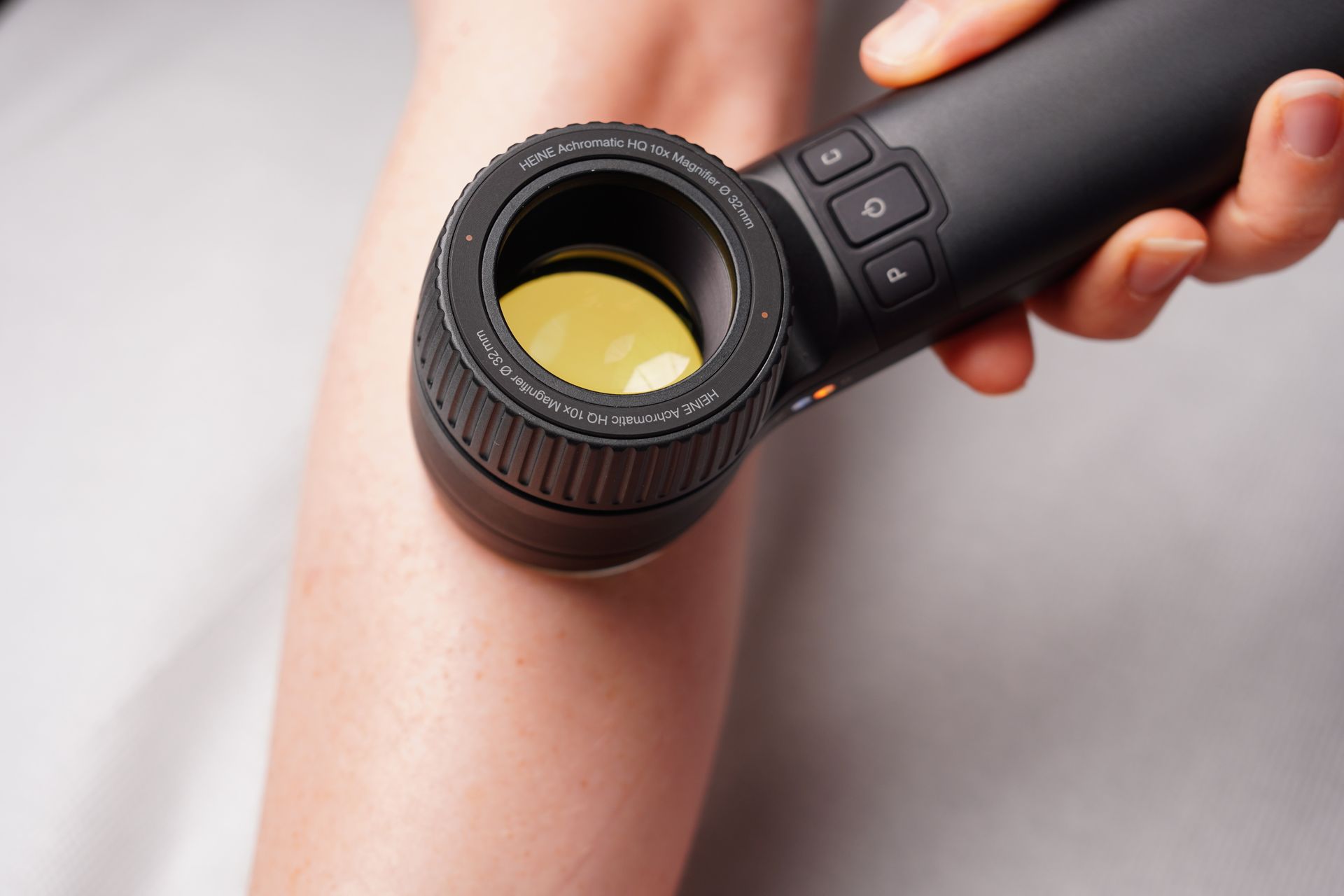
An accurate diagnosis requires a thorough specialist dermatological assessment. Our dermatologists use clinical examination, dermoscopy to magnify and assess skin changes and, where necessary, skin biopsy, laboratory tests and diagnostic imaging, depending on the symptoms and clinical presentation.
Based on the consultation and examination, the dermatologist will assess which skin conditions may explain the symptoms and whether further investigations, such as blood tests or allergy testing, are required.
TREATMENT OF SKIN DISEASES
Treatment depends on the specific diagnosis and may include medication, topical treatment, minor surgical procedures or follow-up appointments.
The aim is to reduce symptoms, improve skin function and prevent complications.
Moles and skin changes
We assess moles and other changes in pigmentation through a clinical examination and dermoscopy.
If skin cancer or precancerous changes are suspected, further diagnostic tests and treatment are arranged promptly. If necessary, a skin biopsy may be performed, or the affected area may be surgically removed.
Frequently Asked Questions
What is acne and why do you get it?
Acne – or pimples – occurs when the skin’s oil glands become clogged and inflamed. It’s most common in teenagers, but many adults experience it too. Causes can include hormonal changes, heredity, skin care products or stress. Acne most often appears on the face, chest and back and ranges from mild blackheads to severe inflammation. Treatment depends on the type and can be both topical and medical.
What is eczema and how does it manifest itself?
Eczema is a condition where the skin becomes dry, itchy, red and sometimes oozing or cracking. There are several forms:
Atopic eczema, which often starts in childhood
Contact dermatitis caused by a reaction to, for example, perfume or nickel
Seborrheic dermatitis, typically seen on the scalp and face
Eczema can flare up and often requires moisturizers and, in some cases, medical treatment.
What is Psoriasis?
Psoriasis is a chronic skin disease in which the skin produces new cells too quickly. This leads to red, scaly patches – often on the elbows, knees, scalp and back. The disease fluctuates between outbreaks and calmer periods. It can also affect the nails and joints. Psoriasis is caused by a combination of hereditary factors and external influences, such as infections or stress.
What is skin cancer and pre-cancerous lesions?
Skin cancer is a general term for several types of skin cancer. The most common are:
Basal cell cancer – grows slowly and rarely spreads
Squamous cell carcinoma – can spread if left untreated
Melanoma – the most serious form that can spread quickly
Precancerous lesions, such as actinic keratoses, appear as rough or scaly patches and should be investigated. Early detection is important – especially if a spot changes color, shape or starts to bleed.
Other skin diseases
We also treat, among other things:
– Rosacea
– Hair loss
– Nail fungus
– Hives
– Perioral dermatit
– Pigment changes
When should you see a dermatologist?
You should contact a dermatologist if a skin lesion changes color, shape, or size, if you have persistent itching or a rash, or if treatment from your doctor has not had any effect.
At Charlottenlund Privathospital, we offer quick assessments without waiting time.
Why choose Charlottenlund Private Hospital?
Safe and caring treatment by the staff present. Centrally located in the middle of Charlottenlund, with 2 hours of free parking and a stone's throw from Charlottenlund Station and public transport.
Charlottenlund Private Hospital is located in bright and beautiful premises with a view of Charlottenlund Forest and offers an exclusive and unique patient experience where you are called in on time and do not have to sit and wait for hours in crowded waiting rooms. We make a virtue of the setting and surroundings matching our high professional level, so that the entire visit is as you wish.
Book an appointment for a dermatological examination and treatment
If you would like to be treated with us, please feel free to contact us. Our secretaries are ready to help and answer any questions you may have, as well as to find time for both the preliminary examination and the surgery.