


Aviation Medical Examinations – Class 2, LAPL and Cabin Crew
Aviation medical examinations for pilots, AFIS operators and cabin crew at Charlottenlund Privathospital. Examinations are conducted by approved Aeromedical Examiners (AMEs).
At Charlottenlund Privathospital, Aeromedical Examiners Eva Lykke and Jacob Fisker conduct examinations for Class 2 medical certificates, LAPL medical certificates and cabin crew medical reports. Both are ENT specialists approved by the Danish Civil Aviation Authority as Aeromedical Examiners (AME). Examinations include Initial, Revalidation and Renewal under EU Part-MED regulations and take place at the main hospital in Charlottenlund, north of Copenhagen. Class 2 covers private pilots (PPL), AFIS operators and commercial glider and balloon pilots. The Aeromedical Examiner determines whether a medical certificate can be issued. Class 1 and Class 3 are not yet offered.
What is an Aeromedical Examiner (AME)?
An Aeromedical Examiner (AME) is a doctor authorised to assess whether pilots and cabin crew meet the medical requirements for aviation. In Denmark, AMEs are approved by the Danish Civil Aviation and Railway Authority (Trafikstyrelsen), which maintains a public register of approved examiners.
Medical examinations are conducted in accordance with European aviation medical regulations, including Part-MED (Annex IV to Regulation (EU) No 1178/2011). Medical certificates issued under these regulations are recognised across EASA member states, subject to the applicable requirements.
The AME assesses medical fitness and determines whether a certificate can be issued. In certain cases, consultation with or referral to the aviation authority's medical assessors is required.
At Charlottenlund Privathospital, ENT specialists and approved AMEs Eva Lykke and Jacob Fisker conduct Initial, Revalidation and Renewal examinations for Class 2 and LAPL medical certificates, as well as medical assessments for cabin crew.
Initial Class 1 and Class 3 examinations must be performed at an approved Aero-Medical Centre (AeMC). Charlottenlund Privathospital does not currently offer Class 1 or Class 3 examinations.
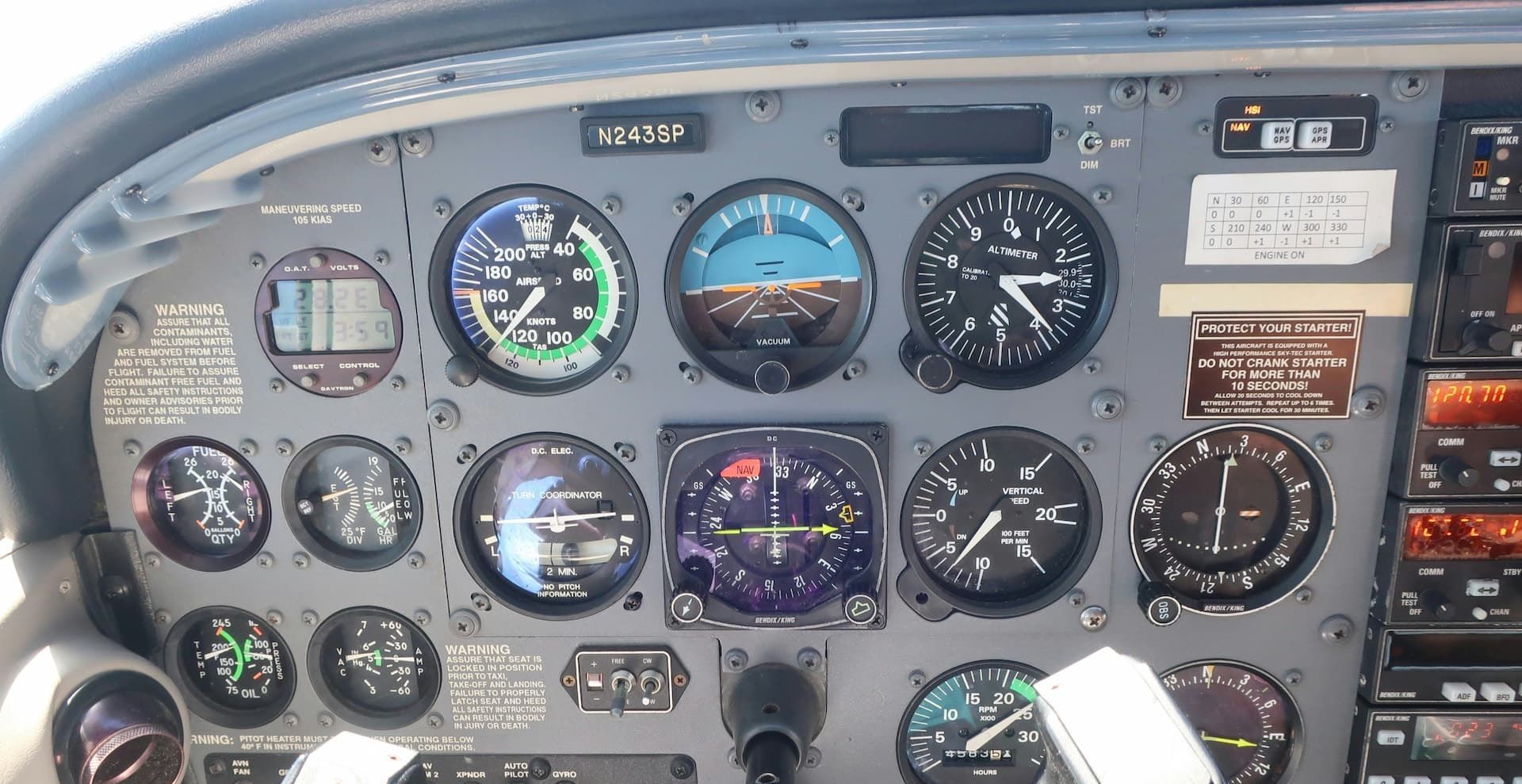
Which Aviation Medical Certificate Is Required?
The required medical certificate depends on the pilot licence or aviation role, rather than solely on the aircraft type. At Charlottenlund Privathospital, approved Aeromedical Examiners (AMEs) conduct examinations for Class 2, LAPL and cabin crew medical certification.
Class 1 certificates for commercial pilots (CPL, MPL and ATPL) and Class 3 certificates for air traffic controllers are not currently offered.
Night flying also requires an assessment of colour vision to determine whether the applicable medical requirements are met.
How Long Is a Medical Certificate Valid?
Validity depends on the certificate class and age at examination. A Class 2 medical certificate is valid for 60 months below age 40, 24 months from age 40 to 49, and 12 months from age 50. Certificates issued before age 40 expire no later than the 42nd birthday, and those issued before age 50 no later than the 51st birthday. A LAPL medical certificate is valid for 60 months below age 40 and 24 months thereafter. A cabin crew medical report is valid for up to 60 months.
When revalidation takes place within 45 days before expiry, the new validity period starts from the previous expiry date. Earlier examinations are treated as renewals, with validity calculated from the examination date.
under 40
ages 40–49
age 50+
What Is the Difference Between Initial, Revalidation and Renewal?
Part-MED distinguishes between three examination types, each with specific requirements. For Class 2 renewal, the requirements depend on how long the certificate has expired. If expired for less than 2 years, a revalidation examination applies. After 2–5 years, the Aeromedical Examiner (AME) reviews previous medical records before assessment. If expired for more than 5 years, the requirements for an initial examination apply.
Are Medical Records and Reports Required?
As a general rule, no. Since June 2026, the Danish Civil Aviation and Railway Authority no longer routinely requires documented medical histories for Class 2, LAPL and cabin crew examinations, whether Initial, Revalidation or Renewal. Assessments are based on the completed and signed application form and the Aeromedical Examiner's (AME) examination. Some online guidance still reflects the previous requirements.
During online booking, a short consent form and a few general health questions are completed. The application form is completed upon arrival. If additional medical information is required, it is reviewed with the patient or obtained with consent. A medical certificate cannot be issued, revalidated or renewed until any necessary documentation has been provided.
What Happens During an Aeromedical Examination?
The examination process is similar for all three certificate types and generally takes a couple of hours. The specific tests depend on the certificate class, examination type and age. If health changes occur between examinations, an aeromedical consultation may be appropriate instead, as described in the next section.
When Is Aeromedical Advice Required Between Examinations?
A medical certificate remains valid only while the applicable medical requirements are met. Under Part-MED, certificate holders must not exercise their licence privileges if a deterioration in health could affect their ability to fly safely. Certain medical conditions require consultation with an Aeromedical Examiner (AME) before flying resumes, even when the certificate remains valid. The Danish Civil Aviation and Railway Authority provides further guidance on illness and medical fitness.

What Do Fit and Unfit Mean?
Fit and unfit describe medical fitness to fly, including changes in health between examinations. During Initial, Revalidation or Renewal examinations, the Aeromedical Examiner (AME) determines whether a medical certificate can be issued, with limitations if necessary, or whether the requirements are not met. A refusal is issued in writing and may be appealed to the Danish Civil Aviation and Railway Authority.
Illness, injury, surgery or changes in regular medication may affect medical fitness. In such cases, the AME may assess the certificate holder as unfit. Flying privileges must not be exercised until medical fitness has been reassessed and confirmed. The certificate may remain issued, while formal suspension or revocation is handled by the Danish Civil Aviation and Railway Authority.

What Happens If Further Medical Tests Are Required?
Under Part-MED, the Aeromedical Examiner (AME) may request additional tests when further assessment is needed. These may include blood tests, lung function testing, cardiac examinations or an ophthalmological assessment. Further information is available on the page covering medical requirements.
Charlottenlund Privathospital offers both ENT and cardiology services. Pressure changes during ascent and descent can affect the ears and sinuses. Conditions such as ear pressure problems, hearing loss, tinnitus and dizziness may be assessed by ENT specialists. ECGs and further cardiac assessments are performed within the cardiology department when clinically indicated.
Who Are the Aeromedical Examiners at Charlottenlund Privathospital?
Eva Lykke (DK/AME/91) and Jacob Fisker (DK/AME/92) are both ENT specialists approved by the Danish Civil Aviation and Railway Authority as Aeromedical Examiners (AMEs). Both are authorised to conduct Class 2, LAPL and cabin crew medical examinations.
How Are Appointments Booked, and What Is Required?
Appointments can be booked online. For booking enquiries, the hospital can be contacted by telephone on 44 98 19 21, Monday to Friday, 8 am–2 pm. Examinations take place at the main department in Charlottenlund. Prices are available on the hospital's price list.
Photo identification, an existing medical certificate (if applicable), and glasses or contact lenses should be brought to the examination. Existing specialist reports concerning known medical conditions may also be relevant and can be presented during the assessment.

Contact Form
What Do Aviation Medical Abbreviations Mean?
The abbreviations originate from EU regulations governing pilot licensing and aviation medical certification. They are used consistently by Danish Aeromedical Examiners (AMEs) and pilots and generally remain untranslated. The same abbreviations appear on pilot licences, medical certificates and examination documents.
Where Can Forms and Regulations Be Found?
Application forms and current aviation medical regulations are available from the Danish Civil Aviation and Railway Authority (Trafikstyrelsen), the competent authority for aviation medicine in Denmark.
- Aviation medicine – Danish Civil Aviation and Railway Authority
- Before an Aeromedical Examination
- Updated Medical Documentation Requirements
- Aviation Medical Regulations
Questions concerning regulatory requirements can be directed to the Danish Civil Aviation and Railway Authority at medical@trafikstyrelsen.dk.
Related Information
Detailed medical requirements and related medical specialties.
Frequently Asked Questions
What is the difference between an aviation medical examiner and an AME?
There is no difference. AME stands for Aeromedical Examiner, the English term for an aviation medical examiner approved by the aviation authority to conduct aeromedical examinations under Part-MED. In Denmark, aviation medical examiners are approved by the Danish Civil Aviation and Railway Authority.
Do I need to bring my medical records for a Class 2 medical?
As a general rule, no. Since June 2026, the Danish Civil Aviation and Railway Authority no longer routinely requires medical records, information from sundhed.dk or a medication list for Class 2, LAPL and cabin crew examinations. The assessment is based on the signed application form and the examination by the aviation medical examiner. If further information is needed, it will be obtained with your consent.
When do I need to have an audiometry test for Class 2?
Only if you hold or are applying for an instrument rating (IR or BIR). In that case, you will have an audiometry test at your initial examination, every 5 years until age 40, every 2 years until age 60, and annually thereafter. Without an IR or BIR, your hearing is tested with a speech test.
Can I get a Class 1 medical at Charlottenlund Private Hospital?
Not yet. The initial Class 1 examination may only be performed at an Aero-Medical Centre (AeMC). The aviation medical examiners at Charlottenlund Privathospital are currently authorised for Class 2, LAPL and cabin crew.
Is a limitation the same as a refusal?
No. A limitation means the medical is issued subject to a condition, such as wearing glasses or having a shorter validity period. If your application is refused, no medical is issued.
Will I lose my medical if I become ill?
No, not automatically. Following an illness, surgery or starting regular medication, you may be unfit for a period and unable to fly, but your medical remains issued. You can fly again once the aviation medical examiner has cleared you as fit. Only the Danish Civil Aviation and Railway Authority can suspend or revoke a medical.