


Scabies – diagnosis and treatment by a dermatologist
A specialist in dermatology diagnoses and treats scabies in children and adults – including when the first treatment has not worked.
Scabies is a contagious skin condition caused by the scabies mite Sarcoptes scabiei. The mite burrows into the outermost layer of the skin. This causes intense itching, typically worse at night, as well as small bumps and burrows between the fingers, on the wrists, in the armpits, around the navel and in the genital area. At Charlottenlund Privathospital, Susanne Birkballe, specialist in dermatology, diagnoses scabies through examination with a dermatoscope and, when needed, a skin scraping. She also develops a treatment plan for the patient and household. Both children and adults can be examined.
What is scabies?
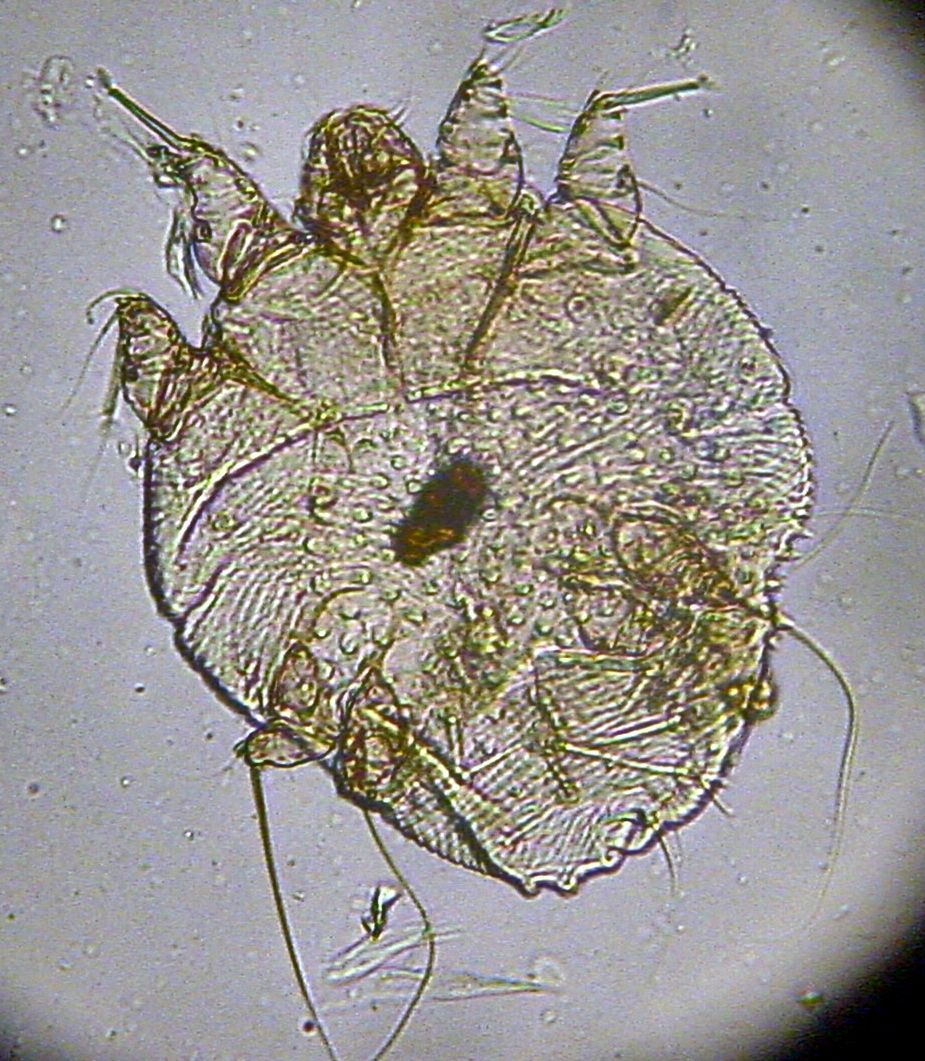
The scabies mite is less than half a millimetre long and is almost impossible to see with the naked eye. The female mite burrows into the outermost layer of the skin and lays eggs in a narrow tunnel, which may appear as a short, winding line on the skin. The itching is caused by the immune system reacting to the mites, their eggs and their waste products. This is why it can take several weeks after infection before symptoms appear the first time someone gets scabies.
In ordinary scabies, there are usually only a small number of mites on the body – according to the European guideline, fewer than 15. Even so, the rash can spread far beyond the areas where the mites are actually located. In the rare form known as crusted scabies, very large numbers of mites are found in thick crusts on the skin. This form is seen particularly in older people and in people with weakened immune systems. It is highly contagious and requires more extensive treatment.
Scabies occurs worldwide. According to the WHO, at least 200 million people have scabies at any given time.

How does scabies spread?
Scabies spreads through prolonged close skin contact, for example between family members, partners and children who play closely together, as well as through sexual contact. A brief handshake rarely causes infection. With ordinary scabies, transmission through clothing, bedding and towels is uncommon, whereas crusted scabies can also spread in this way.
A person can infect others before developing symptoms. This is why everyone in the household and other close contacts should be treated at the same time – including those who are not itching. Otherwise, the infection can continue to pass back and forth between people. Scabies is not related to poor hygiene.

What are the symptoms of scabies?
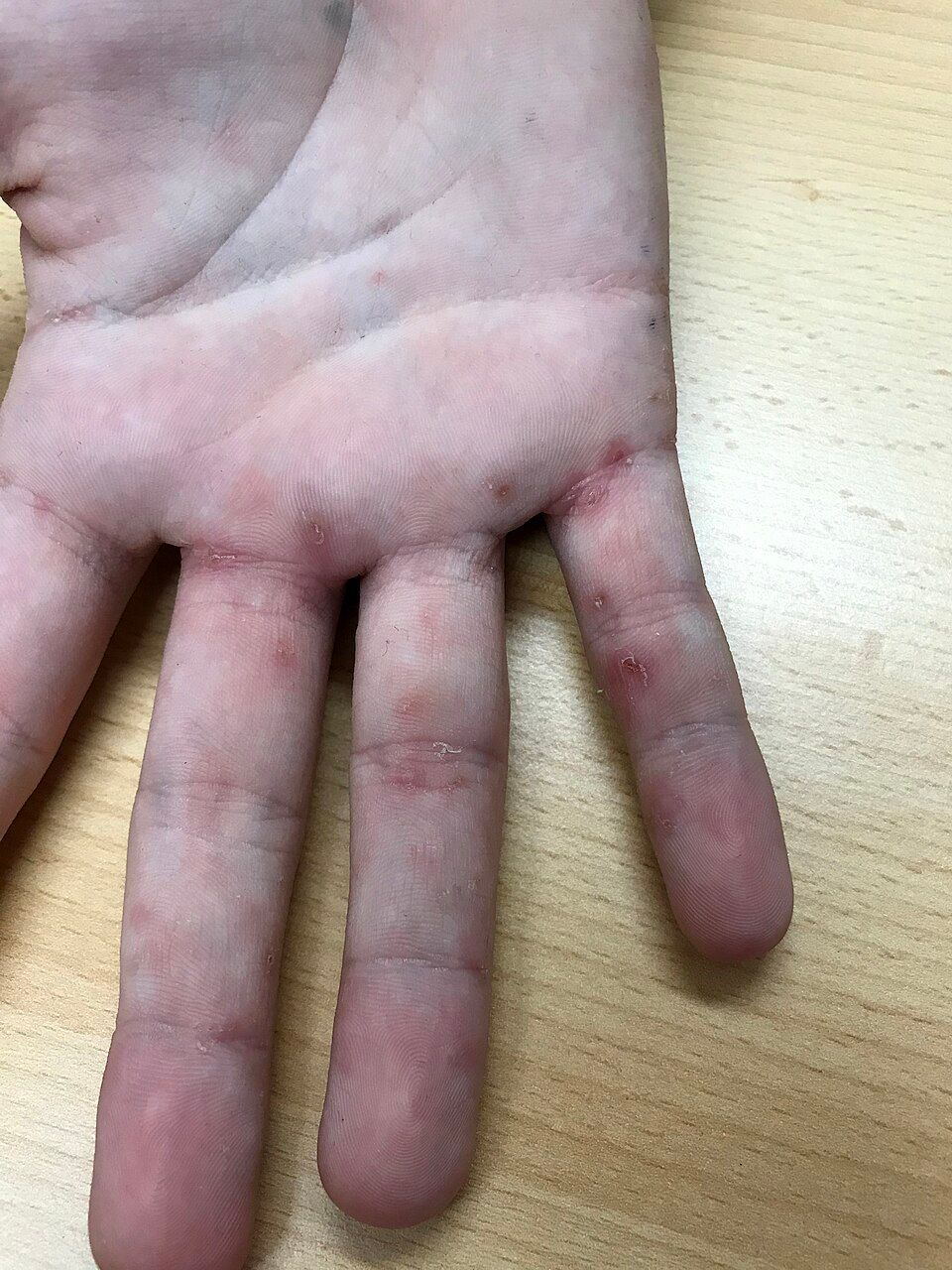
The main symptom is itching that is worse at night or when you get warm. The itching can be so severe that it disrupts sleep. Small red bumps, scratch marks and the short, thin burrows characteristic of scabies can be seen on the skin.
Burrows are typically found between the fingers, on the wrists, at the elbows, in the armpits, around the navel and waist, on the buttocks and around the genitals. In adults, the head, palms and soles are usually unaffected. Men may develop firm, itchy nodules on the genitals.
Because the itching and scratch marks can look like eczema, scabies is often mistaken for eczema—including eczema on the hands. Eczema cream can ease the itching for a while without getting rid of the mites. Scratches can also become infected.
When should you see a dermatologist about scabies?
You should see a doctor if you have itching that is worse at night and several people in your household are itching in the same way. A dermatologist is particularly relevant when the diagnosis is uncertain, when itching continues for several weeks after treatment, or when scabies comes back. This also applies when a young child, a pregnant woman or an older person has symptoms, and when there are thick crusts on the skin, which may be a sign of crusted scabies.
How does a dermatologist diagnose scabies?
The assessment begins with a conversation about the itching, when it started, and whether others in the household or sexual partners have similar symptoms. The skin is then examined all over the body.
The skin is examined with a dermatoscope—a magnifying glass with a light. This makes it possible to see the mites’ burrows and often the mite itself, as a small dark triangle at the end of the burrow. Scabies is a clinical diagnosis, based on the itching, rash and presence of burrows. A sample for microscopy can confirm it, but is rarely necessary.
The examination is carried out by Susanne Birkballe, specialist in dermatology. If it turns out not to be scabies, but for example contact dermatitis, hives or psoriasis, a treatment plan will instead be drawn up based on that diagnosis.
How is scabies treated?
If cream treatment does not work or is not suitable, tablet treatment can be added. Pregnant women can also be treated, using a cream. The specialist assesses which treatment is appropriate for the patient’s age and the extent of the condition.
Why does it still itch after treatment?
The itching does not go away straight away, even when the mites are dead. According to the European guideline, itching can last up to 2–4 weeks after treatment because the skin is still reacting to the dead mites and their waste. So itching after treatment does not necessarily mean that the treatment has not worked.
If new burrows or bumps appear, or the itching gets worse again after a period of improvement, this may indicate that the mites have survived or that you have been reinfected. Common reasons include not applying the cream to the entire body, washing it off too soon, or a contact not being treated at the same time. The dermatologist will determine whether scabies is still present and whether the treatment needs to be changed.

Scabies in children
Scabies is common in children because they have a lot of close contact with one another. In infants and young children, the rash can also appear on the palms, soles of the feet, scalp and face, and can look like childhood eczema. The dermatologist sees children of all ages and treats them with cream, including on the scalp and face, or with tablets, depending on the child’s age.
Referrals and payment
Many health insurance policies cover a dermatologist’s examination, but insurers typically require a referral from your GP and prior authorisation. No referral is needed if you are paying privately. Prices are listed in the price list. Consultations take place at the main clinic in Charlottenlund.
Frequently asked questions
How can you tell if you have scabies?
Typically, there is itching that is worse at night, along with small bumps and short burrows between the fingers, on the wrists and around the waist. Often, several people in the household itch at the same time. The diagnosis is made during an examination, when the dermatologist looks for burrows with a dermatoscope.
How long does it take for scabies symptoms to appear?
The first time you get scabies, it typically takes 3–6 weeks from infection for the itching to begin. If you are infected again, itching can start after just 1–3 days.
Does the whole family need to be treated for scabies?
Yes. Everyone in the household and other close contacts should be treated at the same time, even those who are not itching. This is because you can pass scabies on to others before you develop symptoms yourself.
How long does the itching last after scabies treatment?
Itching can last up to 2–4 weeks after effective treatment. If new burrows or bumps appear, or the itching gets worse again, you should have it assessed to see whether scabies is still present.
Can you get scabies from bedding?
This rarely happens with common scabies, which is mainly spread through prolonged skin-to-skin contact. Even so, clothes, bed linen and towels should be washed at a temperature of at least 50 degrees or placed in a sealed plastic bag for a week.
Can children get scabies?
Yes, scabies can affect children of any age. In young children, the rash can also appear on the palms, soles of the feet, scalp and face. The dermatologist sees children of all ages.
Can pregnant women be treated for scabies?
Yes. Pregnant women can be treated for scabies, using a cream. The dermatologist explains how to apply the cream and when treatment should be repeated.