


Perioral dermatitis – diagnosis and treatment by a dermatologist
A dermatologist identifies the cause of the rash around the mouth and draws up a treatment plan.
Perioral dermatitis er et udslæt med små røde bumser og tør, skællende hud omkring munden – og nogle gange ved næsen og øjnene. Huden lige ved læberne går typisk fri. Udslættet rammer især kvinder mellem 15 og 45 år og hænger ofte sammen med binyrebarkhormoncreme i ansigtet, mange hudplejeprodukter eller mundbind. Behandlingen begynder med mild basispleje – en meget mild ansigtssæbe og en enkel fugtighedscreme – og suppleres efter behov med lokal- eller tabletbehandling. På Charlottenlund Privathospital udredes og behandles perioral dermatitis hos børn og voksne af Susanne Birkballe, speciallæge i dermatologi.
What is perioral dermatitis?
Perioral dermatitis is an inflammatory skin condition around the mouth. The name means exactly that: “perioral” means around the mouth, and “dermatitis” means inflammation of the skin. The rash resembles rosacea and acne, but is a distinct skin condition. Each year, 0.5–1% of people develop perioral dermatitis, and it is most common in women with fair skin. The rash is not contagious.
What does perioral dermatitis look like?
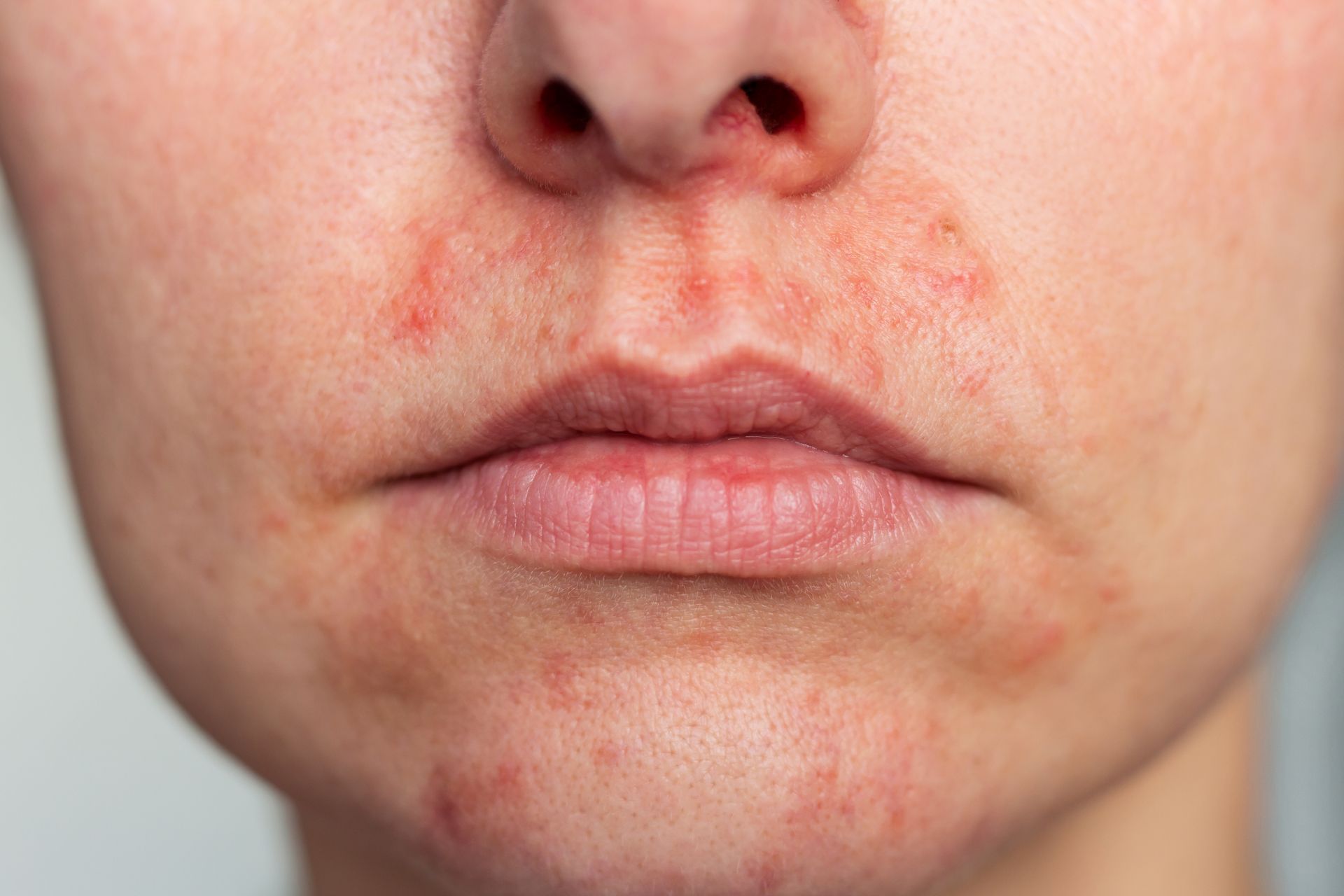
The rash has clearly defined edges and is located close around the mouth, often in the creases running from the nose to the corners of the mouth. One of the clearest signs is the narrow strip of healthy skin right next to the lips. Many people experience tightness and stinging, especially when applying cream.
What triggers perioral dermatitis?
The most common trigger is topical steroid cream on the face. The cream may reduce the rash at first, but makes it worse in the long run. Nasal and lung sprays containing steroids, rich creams, foundation and fluoride toothpaste can also play a role for some people. Often there is no single cause, but rather a combination of many products being used on the skin at once.
Perioral dermatitis, rosacea or acne?
Perioral dermatitis is often confused with rosacea and acne. Rosacea typically appears in the middle of the face and causes redness and visible blood vessels, while acne causes blackheads. Perioral dermatitis causes neither visible blood vessels nor blackheads and is concentrated around the mouth. The rash can also look like contact dermatitis caused by a cream or lip product – and the two can occur at the same time.
When should you see a dermatologist for perioral dermatitis?
You should see a dermatologist if the rash does not improve after cutting back on creams and makeup for a few weeks, or if it keeps coming back. You should also seek advice if the rash spreads to your nose and eyes, if you have used a topical steroid cream on your face for a long time, or if you are unsure what it is.
How does a dermatologist diagnose perioral dermatitis?
The diagnosis is based on the appearance and location of the rash and a thorough review of the products you use. It is very helpful to bring all your creams, makeup, sprays and lip products to your appointment. If a particular substance is suspected of causing an allergy, a patch test can confirm this. At Charlottenlund Privathospital, the test is performed by Susanne Birkballe, specialist in dermatology.
How is perioral dermatitis treated?
Treatment takes time, and the rash may get worse during the first few weeks before it gets better – especially if you have used a topical steroid cream. You should see improvement after a couple of weeks of treatment; otherwise, you move on to the next step. Treatment is stepped up in three stages:
What can you do yourself?
The most important thing is to give your skin a chance to rest. The fewer products you use on your face, the better the chance that the rash will settle down and stay away.
Perioral dermatitis in children
Perioral dermatitis also occurs in children, where the rash often appears around the mouth, nose and eyes. In children, it is often linked to steroids – for example, a cream for facial eczema or a spray for asthma and hay fever. Children are primarily treated with creams, and treatment is tailored to the child’s age. The dermatologist sees children of all ages.
Referrals and fees
Many health insurance policies cover a dermatologist’s assessment, but insurers typically require a referral from your GP and prior authorisation. No referral is needed if you are paying privately. Fees are listed on the price list. Appointments take place at the main clinic in Charlottenlund.
Frequently asked questions
Is perioral dermatitis contagious?
No. Perioral dermatitis is an inflammatory skin condition and is not contagious.
How long does it take to get rid of perioral dermatitis?
For a mild rash, it may be enough to cut back on products and use a mild soap and a simple moisturiser. If treatment is needed, it typically lasts 2–3 months, and you should see improvement after a couple of weeks.
Why does the rash get worse when you stop using topical steroid cream?
The skin has become accustomed to the cream, and when you stop using it, the rash often flares up for a while. That’s why the cream is gradually tapered off in consultation with your doctor.
Can you wear makeup if you have perioral dermatitis?
It is recommended to avoid makeup, foundation and rich creams until the rash has settled down. You can then reintroduce products one at a time.
Can perioral dermatitis come back?
Yes. Perioral dermatitis tends to come back, especially if you go back to using lots of products or topical steroid cream on your face.
Is perioral dermatitis the same as rosacea?
No. They look similar, but rosacea appears in the middle of the face and causes visible blood vessels, while perioral dermatitis is concentrated around the mouth and is often caused by creams or topical steroids.