


Itchy rashes – causes and assessment by a dermatologist
A board-certified dermatologist identifies the cause of itchy rashes in children and adults and develops a treatment plan.
An itchy skin rash is a symptom that can have many causes. The most common include eczema, hives (urticaria), contact allergies, scabies, psoriasis and fungal infections. The appearance of the rash, where it occurs on the body and how long it has been present provide the first clues to its cause. At Charlottenlund Private Hospital, itchy skin rashes in children and adults are examined by Susanne Birkballe, a specialist in dermatology. Depending on the suspected cause, skin scrapings, biopsies, blood tests or allergy tests may be performed. A treatment plan is then developed based on the diagnosis.
What causes itchy rashes?
Itching is the skin’s most common symptom. It occurs when nerve fibres in the skin are stimulated – for example, by inflammation, allergy, dry skin, or a parasite in the skin. Many itchy rashes look alike, and the same cream will not work for all of them. For example, an eczema cream will not help with scabies.
Itching is common and often lasts longer than you might think.
Eczema
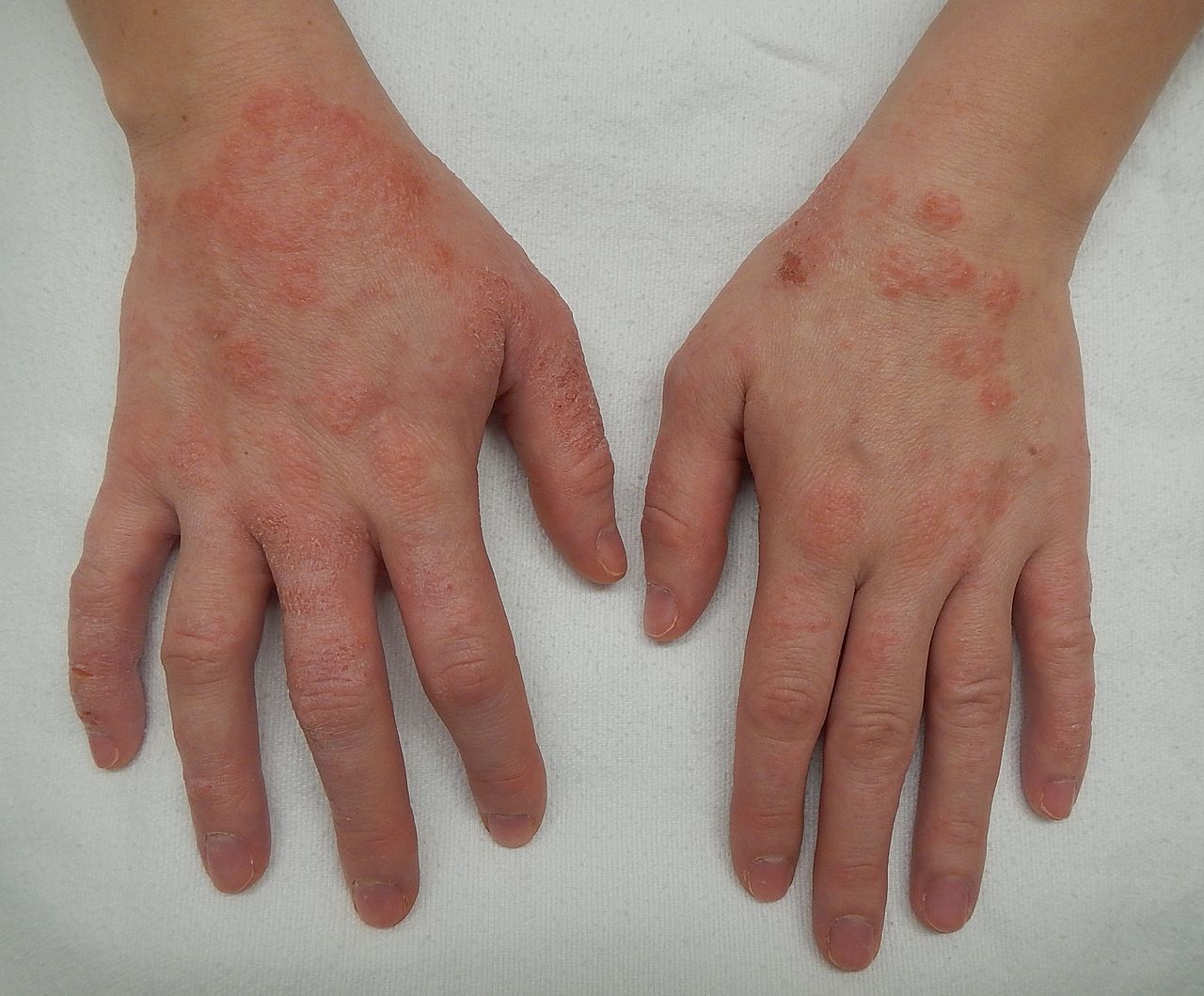
Dry, red and scaly skin that persists for days or weeks. Often affects the creases of the elbows, backs of the knees, hands and face. The itching comes and goes in episodes.
Hives
Raised, red or pale welts that look like marks left by stinging nettles. Each welt usually disappears within a day, while new ones appear elsewhere.
Contact dermatitis
A red, itchy rash where the skin has been in contact with something such as nickel, perfume, or preservatives. Commonly found under a watch strap, around a trouser button, on the face, or on the hands.
Scabies
Itching that is worse at night, small bumps, and short burrows between the fingers, on the wrists, and around the waist. Often, several people in the household itch at the same time.
Other causes include psoriasis, which causes well-defined red patches with silvery-white scales, fungal infections that form a red ring spreading outwards, and lichen planus, which causes small, flat, purple bumps. Medication can also cause itchy rashes.
Hives are very common: According to international guidelines, around 20% of people develop acute hives at some point in their lives. Contact allergy is also common. A pooled analysis of 28 population studies found that around 20% of people had a contact allergy to at least one substance, most often nickel.

What does the location of the rash tell you?
The location can offer a clue, but never a definite diagnosis. Rashes in the creases of the elbows and behind the knees are typical of atopic eczema, while rashes on the hands are often hand eczema – for example, from wet work or contact allergy. Itchy bumps between the fingers and around the waist may be scabies.
Rashes in the armpits can be caused by contact allergy to deodorant, fungal infections, or eczema. Itchy rashes on the shins are common in older people with dry skin, while rashes on the back and stomach may be hives, a viral rash, or a reaction to medication. Psoriasis typically affects the elbows, knees, and scalp.
Itchy rash with blisters – what could it be?
Small, itchy blisters on the palms and sides of the fingers are seen in a particular type of hand eczema. Blisters can also occur with severe contact dermatitis, after insect bites, and with viral infections such as chickenpox and shingles. Shingles typically forms a band on one side of the body and is painful. In older people, large, tense blisters can rarely be caused by a blistering skin disease that should be assessed by a specialist.
Itchy rashes in children
In children, itchy rashes are often caused by childhood eczema, viral infections, hives after an infection, or scabies. The dermatologist sees children of all ages.
If your child has a fever and small red or purple spots on the skin that do not fade when you press a glass against them, call 112 immediately.
Can itching without a rash be a sign of illness?
The most common cause of itching without a visible rash is dry skin, especially in older people and during winter. However, itching can also be associated with conditions affecting the liver, kidneys, or thyroid, iron deficiency, pregnancy, or medication. Rarely, itching is an early sign of a blood disorder.
If itching persists without an obvious cause, it should be assessed. The dermatologist examines the skin and may take blood tests if needed.
When should you see a dermatologist about an itchy rash?
You should consult a dermatologist if the rash has lasted more than a couple of weeks, is spreading, keeps coming back or is disturbing your sleep. You should also seek advice if over-the-counter treatment is not helping, if several people in your household are itching at the same time, or if you suspect an allergy and would like to find out what is causing it.
Call 112 if the rash is accompanied by swelling of the lips, tongue or throat, difficulty breathing or dizziness.
How does a dermatologist assess an itchy rash?
The assessment starts with a discussion about when the rash began, where it is, what makes it better or worse, and whether anyone else in the household has similar symptoms. It helps to bring photos if the rash comes and goes.
The skin is then examined, often with a dermatoscope. Depending on the suspected cause, the dermatologist may take a skin scraping, a small biopsy under local anaesthetic, or blood tests. If contact allergy is suspected, patch testing is performed. If an allergy causing symptoms within minutes is suspected, a skin prick test can be done at the clinic. Allergies to pollen, animals, and foods are investigated at the hospital’s allergy department.
The examination is carried out by Susanne Birkballe, specialist in dermatology.
What can you do to relieve itching?
Keeping the skin moisturised with a rich, fragrance-free cream several times a day often eases the itch. Long, hot showers and fragranced soaps dry out the skin and should be avoided. Cotton clothing is gentler than wool, and keeping nails short helps prevent damage from scratching. Cold, such as a cool compress, can provide short-term relief.
For hives, antihistamine tablets from a pharmacy can ease the itch. If they do not help, or you are unsure of the cause, the rash should be assessed.
Referrals and fees
Many health insurance policies cover a dermatologist’s assessment, but insurers typically require a referral from your GP and prior authorisation. No referral is needed if you are paying privately. Fees are listed on the price list. Appointments take place at the main clinic in Charlottenlund.
Frequently asked questions
What causes itchy rashes?
The most common causes are eczema, hives, contact allergy, scabies, psoriasis, and fungal infections. The appearance of the rash, where it is located, and how long it has lasted provide the first clues, and the dermatologist can make a diagnosis by examining it.
When Should You See a Doctor About an Itchy Skin Rash?
See a doctor if the rash has lasted more than a couple of weeks, is spreading, keeps coming back, or is disturbing your sleep, or if pharmacy treatment is not helping. This also applies if several people in your household are itching at the same time.
How Can You Tell the Difference Between Eczema and Hives?
Eczema causes dry, red, scaly skin that lasts for days or weeks. Hives cause raised welts that move around and typically disappear from the same spot within a day.
Can Itching Without a Rash Be a Sign of Illness?
The most common cause of itching without a rash is dry skin, especially in older people. However, itching can also be associated with conditions affecting the liver, kidneys, or thyroid, iron deficiency, or medication. If the itching persists, it should be assessed, with blood tests taken if needed.
What Can You Do Yourself to Relieve an Itchy Skin Rash?
Applying a rich, fragrance-free moisturiser helps. Avoid long, hot showers and fragranced products, and wear cotton clothing. Keeping nails short helps prevent damage from scratching.
Does the dermatologist see children with itchy rashes?
Yes. The dermatologist sees children of all ages. In children, itchy rashes are often caused by childhood eczema, viral infections, hives, or scabies.