


Excessive Sweating (Hyperhidrosis) – Assessment by a Dermatologist
A specialist in dermatology identifies why you are sweating excessively and which treatment may be appropriate.
Excessive sweating (hyperhidrosis) means sweating more than the body needs in order to regulate temperature – most commonly in the armpits, palms, soles of the feet or face. Primary hyperhidrosis typically begins in the teenage years or young adulthood and is not caused by another illness, while secondary hyperhidrosis may be caused by disease or medication. At Charlottenlund Privathospital, excessive sweating in children and adults is assessed by Susanne Birkballe, specialist in dermatology. The assessment determines which type of hyperhidrosis is present, how widespread it is, and which treatments may be relevant. If treatment is needed that is not offered at the private hospital, the patient is referred elsewhere.
What is excessive sweating?
Hyperhidrosis is sweating in an amount that exceeds what the body needs to regulate its temperature. It is not dangerous, but it can have a major impact on daily life: wet hands that make it difficult to shake hands or write, shirts that need to be changed during the day, and feet that slip inside shoes. According to a German review article, around half of people with hyperhidrosis feel that it affects their quality of life.
There are two main forms. Primary hyperhidrosis is the most common. It affects specific areas, typically on both sides of the body, and is caused by overactivity in the part of the nervous system that controls the sweat glands. Between 2% and 5% of the population have primary hyperhidrosis, and 30–65% have other family members with the same problem.
Secondary hyperhidrosis is caused by something else, for example illness, hormonal changes during menopause, or side effects of medication. It is more likely to affect the whole body and may also occur at night. In these cases, the underlying cause needs to be identified and treated.
Where on the body does excessive sweating occur?
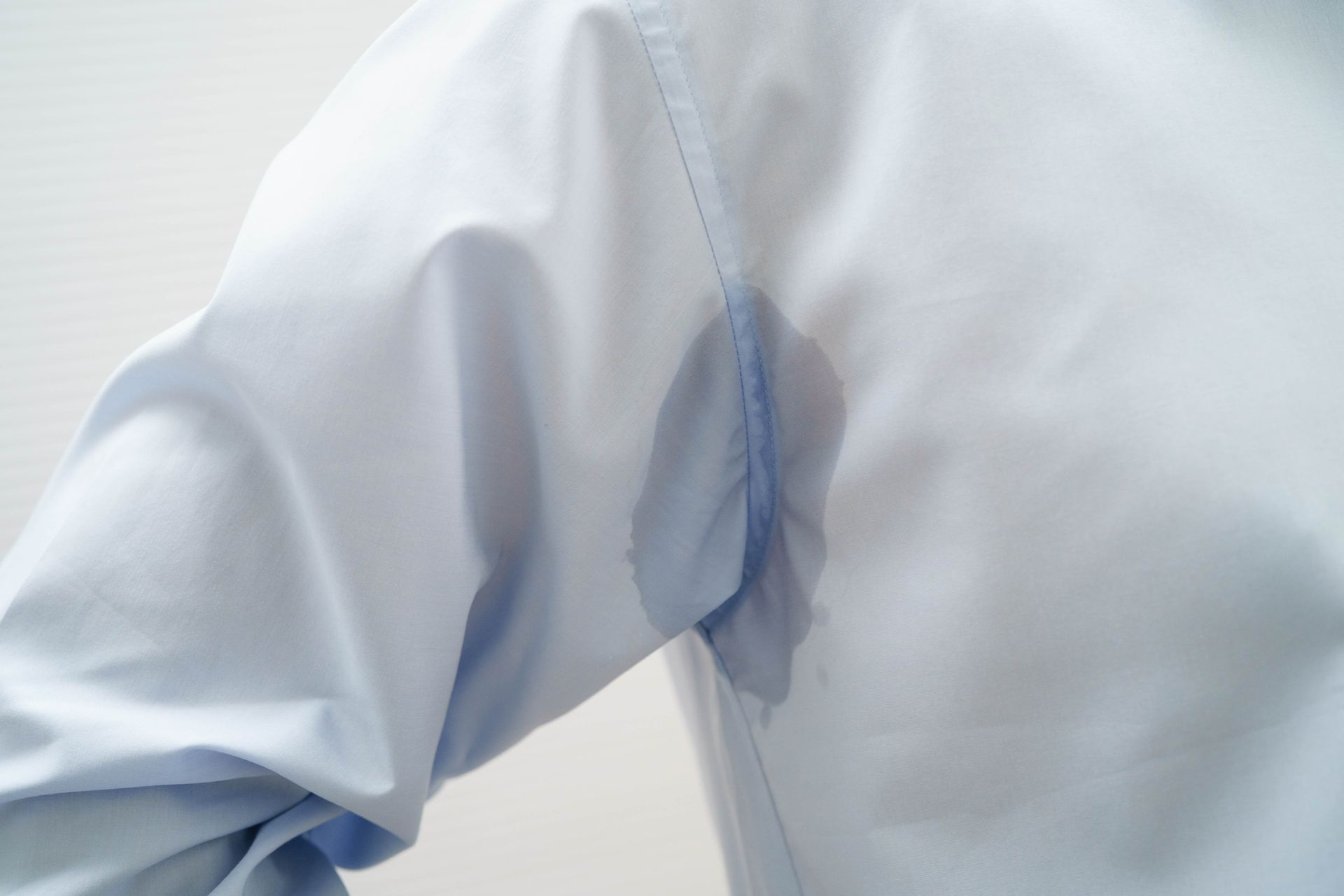
Most people with primary hyperhidrosis sweat excessively under the arms. In a large American study, 65% had excessive sweating in the armpits, either alone or together with other areas. The palms, soles of the feet, face and scalp are also common sites, and many people are affected in several areas at the same time.
Moisture from sweat can also cause other skin problems. Heat and moisture can lead to an itchy rash with small red bumps, and moisture in the groin and around the anus can cause genital and anal itching. In some people, sweat and heat trigger small itchy wheals, a form of hives.
When should you see a doctor about excessive sweating?
You should see a doctor if the sweating interferes with work, school or social situations, or if ordinary antiperspirant does not help. It is also relevant to have the skin examined if it becomes irritated by products used to control sweating, as this may be caused by contact dermatitis.
If the sweating starts suddenly, affects the whole body, or occurs at night, you should first be examined by your GP. This is particularly important if you also have fever, weight loss, palpitations or feel generally unwell, as these symptoms may indicate an underlying illness that needs treatment.
How is excessive sweating assessed by a dermatologist?
The assessment begins with a discussion about when the sweating started, where it occurs, how often it happens, and whether it also occurs at night. The dermatologist asks about medical conditions, medication, whether other family members have the same problem, and how much the sweating affects daily life. A short questionnaire is often used to assess how troublesome the symptoms are.
The skin is then examined in the areas affected by sweating, and the dermatologist looks for signs of eczema, fungal infection or other skin changes that may be related to moisture.
At Charlottenlund Privathospital, the assessment is carried out by Susanne Birkballe, specialist in dermatology. Based on the consultation and examination, the dermatologist assesses whether the sweating is primary or secondary. If there are signs of an underlying medical condition, appropriate blood tests or other investigations are arranged.
What treatments are available for excessive sweating?
Treatment depends on where the excessive sweating occurs and how much it affects everyday life. According to international recommendations, treatment usually starts with the simplest option and progresses to the next step if this is not effective:
- Antiperspirant with a high concentration of aluminium salts, applied in the evening
- Cream that reduces sweat gland activity
- Treatment using a weak electrical current in water (iontophoresis) for the hands and feet
- Injections that block the nerve signals to the sweat glands, typically in the armpits or palms
- Tablets that reduce sweating throughout the body
- Surgery in rare cases
The dermatologist explains the options and develops a treatment plan. With secondary hyperhidrosis, the underlying cause needs to be treated. If a treatment is needed that is not offered at Charlottenlund Privathospital, the patient is referred elsewhere.
What can you do yourself?
Many people find that simple changes in daily life help. Antiperspirant works best when applied to dry skin in the evening, when the sweat glands are least active.
Clothing made from cotton, wool or moisture-wicking technical fabrics can help move moisture away from the skin, while loose-fitting clothes often cause less discomfort than tight clothing. Socks can be changed during the day, and shoes that are allowed to dry between uses may reduce symptoms.
Spicy food, alcohol and coffee can increase sweating in some people.
Excessive sweating in children and young people
Primary hyperhidrosis typically begins between the ages of 14 and 25 but can also start in childhood, particularly on the palms and soles of the feet.
In children and young people, excessive sweating can affect schoolwork and social life, and many wait a long time before talking about the problem. If a child also has eczema, sweat and heat can make the itching associated with childhood eczema worse.
The dermatologist sees children of all ages and assesses which treatment is appropriate for the child’s age.
Referral and payment
Many private health insurance policies cover examination by a dermatologist, but insurers typically require a referral from the patient’s GP and prior approval. Self-paying patients do not need a referral. Prices are available in the price list. Consultations take place at the main hospital in Charlottenlund.
Frequently asked questions
What is excessive sweating?
Excessive sweating (hyperhidrosis) means sweating more than the body needs to regulate its temperature. It most commonly occurs in the armpits, palms, soles of the feet, or face.
What is the difference between primary and secondary hyperhidrosis?
Primary hyperhidrosis is not caused by another medical condition. It usually begins in the teenage years or young adulthood and affects specific areas of the body. Secondary hyperhidrosis may be caused by illness, menopause or medication and more often affects the whole body.
How common is excessive sweating?
Between 2% and 5% of the population have primary hyperhidrosis. In a Danish study, 9% of blood donors reported excessive sweating.
Is excessive sweating hereditary?
Primary hyperhidrosis often runs in families. Between 30% and 65% of people with primary hyperhidrosis have other family members with the same condition.
When should you see a doctor about excessive sweating?
You should see a doctor if excessive sweating affects your daily life or if ordinary antiperspirant does not help. Sweating affecting the whole body, night sweats, fever or weight loss should be assessed by your GP.
How is excessive sweating treated?
Treatment depends on where the excessive sweating occurs and how much it affects you. It usually starts with an antiperspirant containing a high concentration of aluminium salts, with options such as iontophoresis, injections or tablets considered if this does not help.