


Nasal turbinate surgery (Conchotomy)
With surgery on the nasal turbinates (turbinate bones), you will quickly get better air in your nose.
Surgery for Enlarged Nasal Turbinates — Safe, Expert Treatment
At Charlottenlund Privathospital, some of Denmark's most experienced surgeons are ready to treat your enlarged turbinates without the wait. We have extensive, long-term experience with surgery on both deviated nasal septums and enlarged turbinates, backed by years of specialized expertise. Every surgeon performing this procedure at our hospital has successfully completed many hundreds of these operations. This deep level of experience ensures that our patient safety and clinical results are of the absolute highest standard. The treatment is also frequently covered by private health insurance.
Do You Need Surgery for Enlarged Nasal Turbinates?
Enlarged nasal turbinates cause many of the same symptoms as a deviated nasal septum. These include persistent, long-term nasal congestion—which is often worse on one side, but can alternate or cause a completely blocked nose. It can also lead to chronic headaches, facial pressure, a reduced sense of smell, and frequent sinus infections.
Unlike patients with a deviated septum, many people with enlarged turbinates find temporary, "magic" relief from over-the-counter nasal sprays. This makes the risk of spray addiction very high. A common symptom for almost all patients is that the blockage is at its worst when lying down at night. If you recognize these symptoms, turbinate reduction surgery (a conchotomy) may be the highly effective solution you need.
Note: While turbinate surgery can be part of larger sinus operations, it is also frequently performed as a standalone procedure.
How a Conchotomy (Turbinate Surgery) is Performed
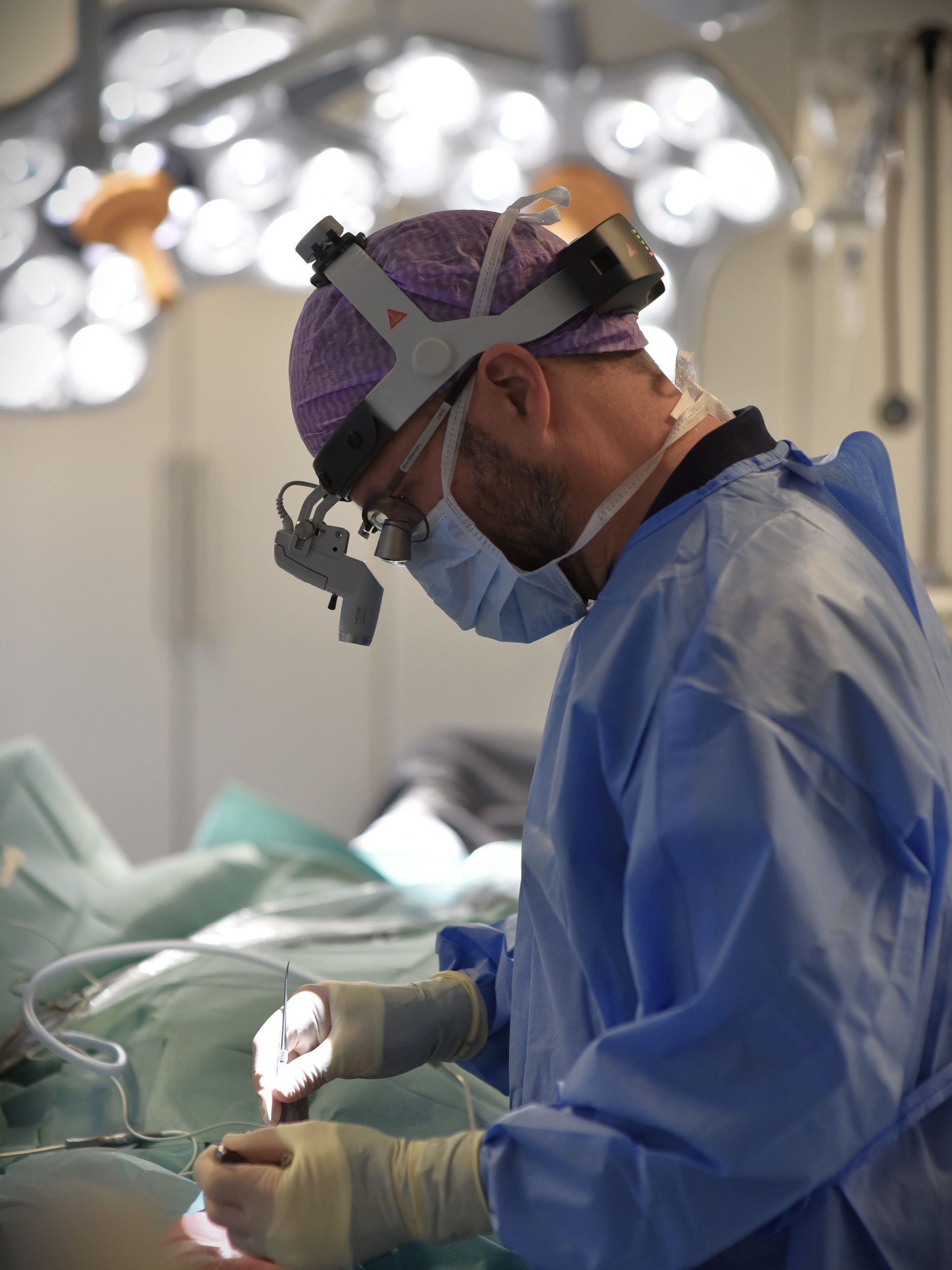
A conchotomy is a minimally invasive, endoscopic surgery. Using a specialized camera through the nostrils, the surgeon gently reduces the excess mucosal tissue from the lower turbinates on one or both sides—leaving absolutely no external scars. At Charlottenlund Privathospital, this procedure is always performed under general anesthesia and typically takes between 30 to 45 minutes in the hands of our experienced specialists.
Aftercare and Healing: What to Expect
Following your surgery, you will stay in our recovery ward for a short observation period before being safely discharged to go home the same day.
Most patients experience only mild discomfort during the first few days. Because the nasal erectile tissue has a very rich blood supply, minor bleeding or spotting is normal and can occur off and on for up to a week. Most patients can return to their normal daily routine within 4 to 7 days, though physically demanding activities and heavy lifting should be avoided for about 14 days to prevent bleeding.
Our medical specialists will provide you with thorough, personalized instructions regarding your recovery, pain management, and aftercare on the day of your surgery.
Book a Consultation
Are you struggling with a chronically blocked nose or finding yourself dependent on nasal sprays? Book an appointment with our specialists today for a professional assessment. We are dedicated to providing safe, secure, and world-class care.
📞 Contact us today — we are ready to help.
Preliminary examination
When you have been diagnosed with concha hypertrophy or enlarged turbinates / turbinates, and you are scheduled for surgery, you will need to undergo a preliminary examination. The preliminary examination takes place at our private hospital in Charlottenlund, where the doctor examines your nose and sinuses with a short binocular examination and possibly a review of the CT scan of your sinuses. Cotton wool with adrenaline will also be placed in your nose to give you an impression of how much the swollen mucous membranes mean for the condition and how much you can achieve with surgery.
During the preliminary examination, the surgeon determines what is needed and whether a conchotomy will be the solution. In some cases, the surgeon will recommend a completely different operation, such as a correction of the nasal septum. In such cases, there will of course be a dialogue about this and a thorough explanation of what options there are for treatment.
Surgery
Surgery for enlarged turbinates (conchotomy) is performed under general anesthesia and takes about an hour. The surgery may take longer if surgery is also required for a deviated nasal septum, nasal polyps, or sinuses.
The surgery does not leave any visible scars or any visible changes to the appearance of the nose. Everything is done through the nostrils.
After surgery, a short sick leave may be required, but most people are ready to go back to work within a week. Strenuous physical work can be resumed after 14 days.
A patient writes the following on TrustPilot after surgery at Kåre in 2024:
''After having 3 nasal septum surgeries in the public sector. I then have a turbinate reduction surgery at Chalottenlund Private Hospital. Just want to say it's the best thing I've ever done for myself, now I can finally get my night's sleep after 25 years of problems with breathing problems. Huge praise to Kåre who operated on me and everyone else at the hospital. I am eternally grateful''
Read also about:
Surgery for chronic sinusitis CAS FESS
Surgery for a deviated nasal septum (septum repair)
Surgery for frequent nosebleeds
You can also read more about treating chronic sinusitis at sundhed.dk.
Frequently Asked Questions
What is a nasal polyp?
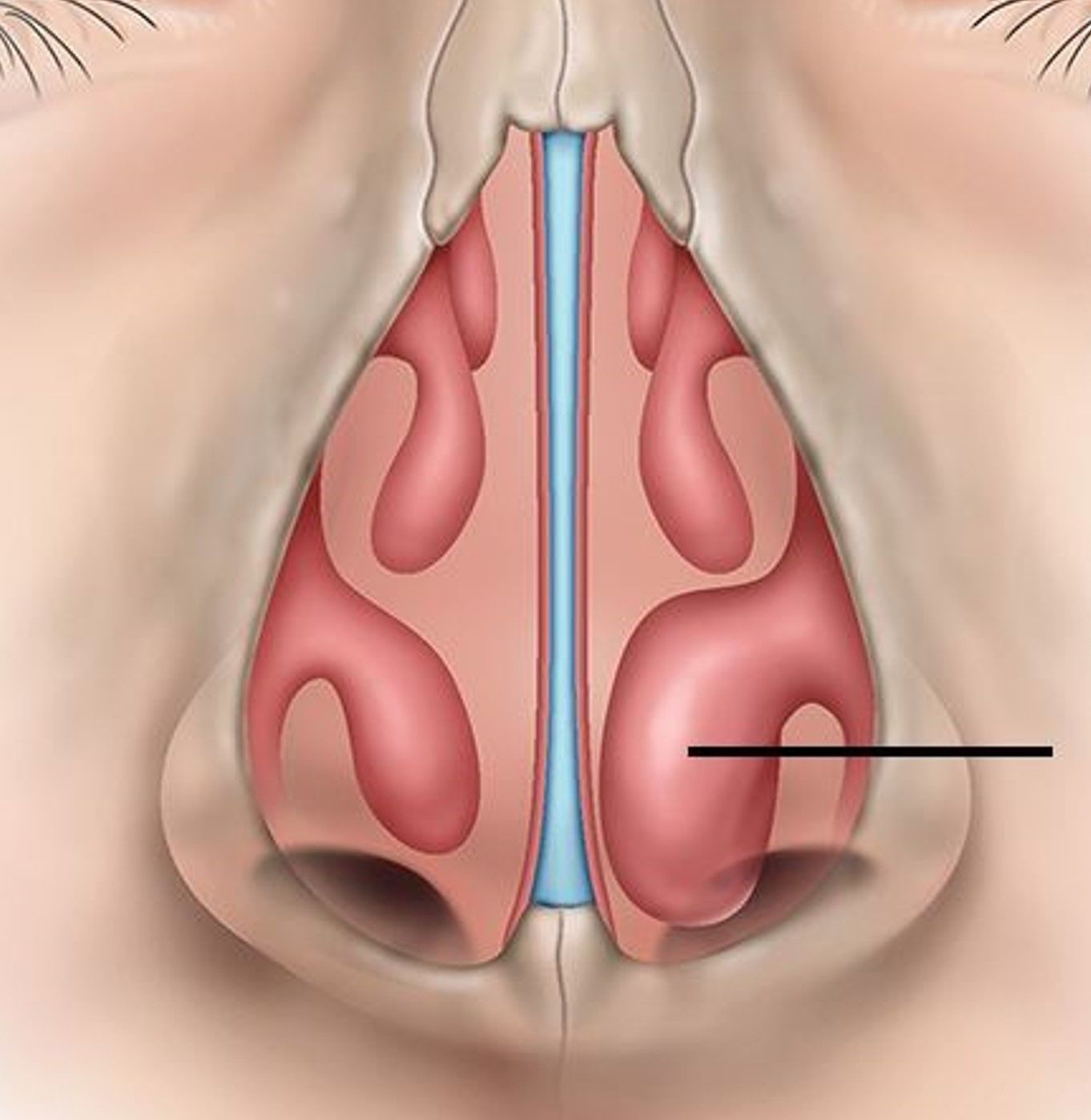
The nasal conchae or conchae nasales are swellings that fill the nasal cavity. There are three on each side - one at the top, one in the middle, and one at the bottom.
Around the upper one are the small nerve fibers for the sense of smell - the middle one is located just outside the entrance to the maxillary sinus, while the lower one is located at the bottom of the nose, right where the air must pass. The spongy bodies are richly supplied with blood and therefore warm and moist. This is to be able to humidify and warm the air before it passes into the lungs and to be able to catch foreign objects in the air before they pass into the lungs.
How do enlarged clam bones occur?
We don't know exactly why some turbinates start to grow. Irritant conditions such as smoking and allergies are thought to contribute, just as the turbinate of the nose sometimes grows if the nasal septum tilts to the opposite side. This is called reactive concha hypertrophy and is very well known.
Most patients with enlarged turbinates in the nose have reported good results from over-the-counter nasal sprays, which cause the mucous membranes to contract. Similarly, patients experience that the problems worsen when they lie down, and the combination of the two experiences is very typical for the patients we encounter with enlarged turbinates in the nose.
When should enlarged clam bones be treated?
Most people experience a blocked nose on one or both sides when they have a cold. If the symptoms persist, it can be easy to become desperate when you can't get air through your nose at night, or are constantly blocked on one or both sides. Many people therefore choose the easy solution and start taking Otrivin or Zymelin - only to quickly become addicted to them. This only makes the pain worse, and contributes to the nose closing off completely in the long term.
The first thing your doctor will therefore do - before surgery is even considered - is to make sure that any abuse of over-the-counter nasal spray has stopped.
Your surgeon can help you with this and prescribe medication that makes it easier to put the over-the-counter medication on the shelf. If this proves to be insufficient and the treatment we initiate does not work, surgery may be an option. Surgery is never the first choice.
Why choose Charlottenlund Private Hospital?
Safe, compassionate care from our expert team, designed to minimize risk.
At Charlottenlund Privathospital, we have extensive experience performing conchotomies. We offer:
Renowned Specialists: All of our surgeons have independently performed over 500 procedures. The operation is exclusively conducted by specialists highly trained in endoscopic sinus surgery.
Advanced Visualization: We utilize state-of-the-art endoscopic and microscopic techniques, ensuring the surgeon has unsurpassed clarity and a complete overview of the surgical field.
Modern Facilities: Our clinic is equipped with the latest technology to ensure an optimal, safe, and comfortable patient experience.
Book an appointment for treatment of enlarged nasal turbinates (conchotomy)
If you believe you suffer from enlarged turbinates and would like to be treated with us, please feel free to contact us. Our secretaries are ready to help and answer any questions you may have, as well as to find time for a preliminary examination and surgery.