


Nasal Polyps: Symptoms, Treatment and Surgery
Nasal polyps are benign, soft growths of the mucous membrane in the nose and sinuses. They cause nasal congestion on both sides and often a reduced or complete loss of the sense of smell – but rarely pain. In most cases, symptoms can be controlled with nasal spray and saline rinsing. If the polyps continue to grow despite treatment, they can be removed as part of endoscopic sinus surgery.
At Charlottenlund Private Hospital, assessment and medical treatment are provided by specialists in ear, nose and throat conditions at several locations across Denmark, while surgery is performed in Charlottenlund.
What are nasal polyps?
Nasal polyps are soft, pale, grape-like growths of mucous membrane that has been inflamed for a long time. They most commonly develop from the ethmoid cells between the eyes and hang down into the nasal cavity, where they take up space that would otherwise allow air to pass.
The polyps are benign. According to a review article in Ugeskrift for Læger, around 4% of people in Denmark have nasal polyps, and they account for just under half of all cases of chronic sinusitis. Nasal polyps almost always occur on both sides of the nose.
What symptoms do nasal polyps cause?
The most common symptom is a nose that feels blocked on both sides – throughout the day and regardless of whether you have a cold. A reduced or completely lost sense of smell is also common, and many people first notice this when food seems to have less flavour.
Other symptoms include discharge from the nose or down the throat, snoring, poor sleep and a voice that sounds nasal or congested.
Pain and facial pressure, however, are not typical symptoms of nasal polyps. According to the European guidelines (EPOS 2020), nasal congestion and reduced sense of smell are the most prominent symptoms when polyps are present, while facial pain and discharge are more common in chronic sinusitis without polyps.
Are nasal polyps the same as adenoids in children?
No.
When people talk about “polyps” in children, they almost always mean adenoids (adenoid vegetations) – lymphatic tissue located behind the nose at the top of the throat, which can cause nasal congestion, snoring and middle ear infections in young children.
Adenoids usually shrink with age and are unrelated to nasal polyps. Nasal polyps are a condition affecting adults and arise from the mucous membrane of the sinuses.
Surgery for nasal polyps at Charlottenlund Private Hospital is offered to adults. Removal of adenoids in children is described on the page about tonsils and adenoids.
Nasal polyps
- Adults
- Growths of the mucous membrane arising from the sinuses
- Nasal congestion on both sides, reduced sense of smell
- Nasal spray – possibly followed by endoscopic sinus surgery
Adenoids in children
- Young children
- Lymphatic tissue behind the nose (adenoid vegetations)
- Nasal congestion, snoring, middle ear infections
- Removed during a short surgical procedure
How are nasal polyps examined?
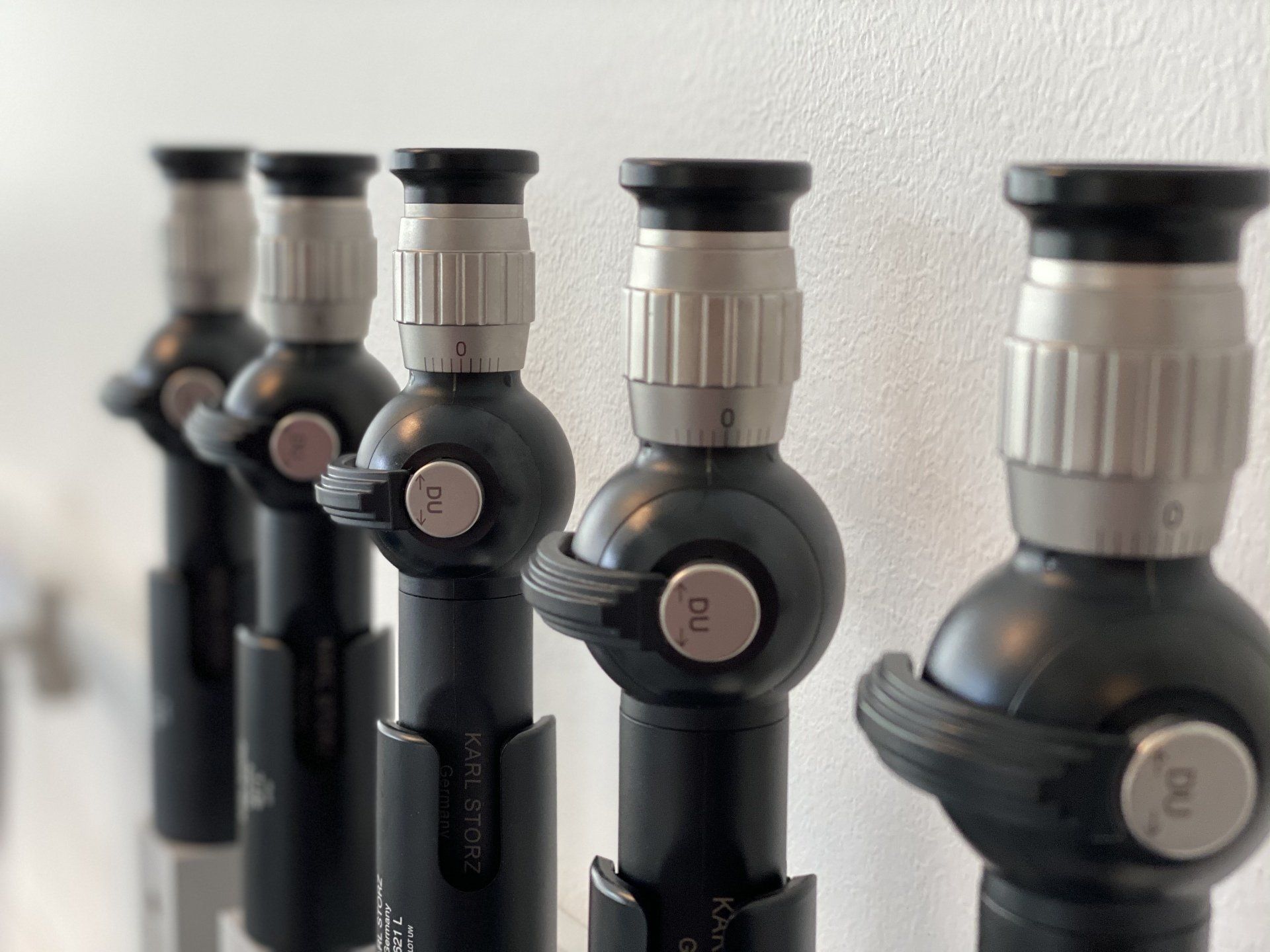
Nasal polyps are identified during an endoscopic examination of the nose, which takes only a few minutes and is performed during the preliminary examination.
The specialist assesses the size and extent of the polyps, asks about the sense of smell, asthma and allergies and examines whether a deviated nasal septum or enlarged nasal turbinates may be contributing to the nasal congestion.
If an allergy is suspected, the examination is supplemented with allergy testing.
Polyps that occur on only one side of the nose are always investigated further, and a tissue sample is taken.
Before surgery, a CT scan of the sinuses must be available. According to the Danish Rhinological Society, the scan must be no more than one year old. CT scans are not performed at Charlottenlund Private Hospital; the specialist will either refer you for a scan or obtain a scan that has already been performed.
How are nasal polyps treated without surgery?
The standard treatment is daily use of a corticosteroid nasal spray combined with saline nasal rinsing.
The spray can make the polyps shrink and help keep them under control, but the effect develops gradually and depends on using the treatment consistently.
For larger polyps, the specialist may supplement treatment with a short course of corticosteroid medication.
If medical treatment has not already been attempted, it is initiated and followed up at Charlottenlund Private Hospital.
Biological medicines for severe nasal polyps are only administered in the public hospital system. If there is an indication for this treatment, you will be referred accordingly.
When and how are nasal polyps operated on?
Surgery is considered when the nose remains blocked or the sense of smell remains absent despite medical treatment.
The polyps are not removed as a separate procedure, but as part of endoscopic sinus surgery, during which the areas from which the polyps develop are opened.
With nasal polyps, the main problem is that the nasal spray cannot reach the diseased mucous membrane effectively. The Danish Rhinological Society therefore recommends that surgery provide the best possible access to the mucous membrane in the nose and sinuses so that nasal spray treatment can work as effectively as possible afterwards.
The operation is performed under general anaesthesia with computer-assisted navigation, and you can usually go home the same day.
The procedure itself, time off work and follow-up appointments are described on the page about chronic sinusitis.
Do nasal polyps come back after surgery?
Nasal polyps have a tendency to return because surgery removes the polyps but does not remove the underlying inflammation of the mucous membrane.
For this reason, corticosteroid nasal spray and saline rinsing are continued after surgery. This is the most important way of delaying the development of new polyps.
It is also recommended that you have a follow-up examination with your own ear, nose and throat specialist around one year after surgery.
According to Danish data compiled by the
Danish Medicines Council, around 670 people in Denmark undergo their first operation for nasal polyps each year, and around 18% of them undergo another operation over the following years.
When should you see a doctor?
A nose that has been blocked on both sides for more than three months, or a reduced sense of smell, should be assessed by an ear, nose and throat specialist.
Nasal congestion affecting only one side, especially when accompanied by blood-stained discharge, should always be investigated.
Swelling around the eye, double vision or severe headache together with nasal congestion requires urgent medical attention.
The treatment pathway at Charlottenlund Private Hospital
The treatment pathway begins with a preliminary examination including an endoscopic examination by an ear, nose and throat specialist – either in Charlottenlund or at one of the hospital’s other locations.
A plan for medical treatment is established and the effect is monitored. If surgery becomes necessary, the CT scan is reviewed and the extent of the procedure is agreed.
The operation is performed in Charlottenlund by specialists with expertise in sinus surgery, including Jacob Fisker and Kåre Håkansson.
Referral and payment
Most patients at Charlottenlund Privathospital come through health insurance; insurance companies typically require a referral from a GP and pre-approval. Self-paying patients do not need a referral, and prices are listed in the price list. If the waiting time in the public system is more than 30 days, you may be entitled to treatment paid for by your region through the extended free choice of hospital scheme. The hospital also has a public-sector contract for ENT services for patients referred from the Capital Region; this treatment takes place in Charlottenlund.
Also read about
Frequently asked questions
Are nasal polyps dangerous?
No, nasal polyps are benign. However, polyps found on only one side of the nose are always investigated further with a biopsy.
Are nasal polyps an allergy?
No. Nasal polyps are caused by type 2 inflammation of the lining – the same type of inflammation seen in asthma – but are not an allergy in themselves. Allergies can worsen symptoms, so they are investigated.
Can nasal polyps cause loss of smell?
Yes. A reduced or lost sense of smell is one of the most typical symptoms because the polyps block airflow to the olfactory area at the top of the nose.
How are nasal polyps removed?
As part of endoscopic sinus surgery under general anaesthesia, the areas from which the polyps grow are opened so that nasal spray can reach them afterwards. The polyps are not removed in a separate procedure.
Do nasal polyps come back?
They tend to come back. According to Danish figures, around 18% have another operation within a number of years, which is why nasal spray and saline rinses are continued after surgery.
Are nasal polyps the same as adenoids?
No. Adenoids are lymphatic tissue behind the nose in young children. Nasal polyps are growths of the lining of the nose, usually in adults.